Company: Bell Laboratories, Inc. Based: New York City, NY. Founded: 1925 (spun-off into Lucent Technologies in 1996, merged with Alcatel to form Alcatel-Lucent in 2007) Founders: created from the merger of Western Electric Research Laboratories & American Telephone & Telegraph's (AT&T) Engineering Department Specialty: Research, Design and support of Western Electric's equipment built for the Bell System operating companies, including Telephone exchange switches & transistorized communication equipment. |
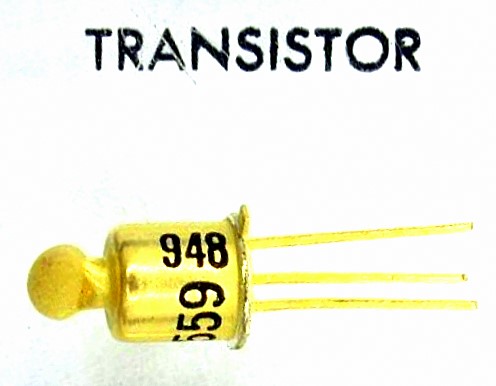
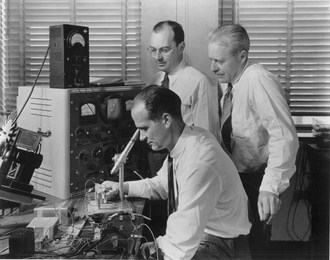 The first transistor was invented at Bell Laboratories in 1947 |



AT&T Page 1 > 2
Bell Lab's Historical Achievements
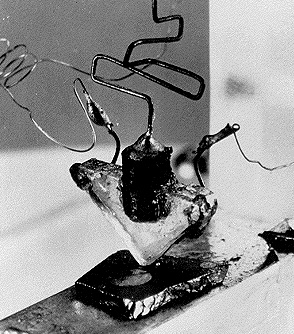
The First Transistor (Bell Labs 1947)
Bell Laboratories (also known as Bell Labs and formerly known as AT&T Bell Laboratories and Bell Telephone Laboratories) is the research and development organization of Alcatel-Lucent and previously of the American Telephone & Telegraph Company (AT&T). Bell Laboratories operates its headquarters at Murray Hill, New Jersey, and has research and development facilities throughout the world.
Over the past 80 years, Bell Labs scientists and engineers have made many extraordinary discoveries, created powerful new technologies, and built the world's most advanced and reliable communication networks.
Seven Nobel Prizes have been awarded for work completed at Bell Laboratories. From the invention of the first transistor, to the creation of the UNIX operating system, no single group has made a more significant contribution to the world of computing and global communications than AT&T's Bell Laboratory.
Timeline of Bell Labs Inventions
|
1940 - LONG DISTANCE REMOTELY OPERATED COMPUTER 1946 - COMMERCIAL MOBILE TELEPHONE SERVICE 1947 - THE FIRST TRANSISTOR 1948 - POINT CONTACT TRANSISTOR 1950 - SINGLE-CRYSTAL GERMANIUM 1951 - GROWN JUNCTION TRANSISTOR 1952 - ALLOY JUNCTION TRANSISTOR 1952 - ZONE MELTING AND REFINING 1951 - DIRECT DISTANCE DIALING 1952 - SINGLE-CRYSTAL SILICON 1954 - SOLAR BATTERY (SOLAR CELL) 1955 - DIFFUSED-BASE TRANSISTORS 1956 - TRANSATLANTIC TELEPHONE CABLE 1957 - OXIDE MASKING 1960 - PLANAR TRANSISTOR 1960 - MOS MOSFET TRANSISTOR 1960 - EPITAXIAL TRANSISTOR |
1961 - INTEGRATED CIRCUITS 1962 - TELEPHONE PAGER 1962 - TELSTAR 1 - FIRST ACTIVE RELAY COMMUNICATIONS SATELLITE 1962 - FIRST COMMERCIAL DIGITAL TRANSMISSION SYSTEM (T1) 1962 - ELECTRET MICROPHONE 1963 - TOUCH TONE DIALING TELEPHONE 1964 - CARBON DIOXIDE LASER 1965 - COSMIC MICROWAVE BACKGROUND 1966 - ORTHOGONAL FREQUENCY-DIVISION MULTIPLEXING 1967 - BUBBLE MEMORY 1968 - MOLECULAR BEAM EPITAXY 1969 - UNIX OPERATING SYSTEM 1969 - CHARGE COUPLE DEVICE (CCD) 1970 - C PROGRAMMING LANGUAGE 1980 - C++ PROGRAMING LANGUAGE |
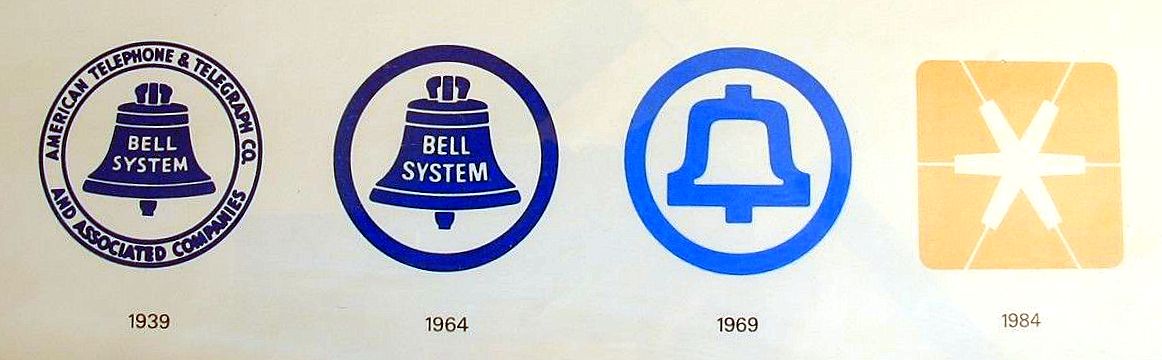
History of Bell Telephone System Logos throughout the years
Western Electric Type-2 / 2A Point Contact Transistor (1951)
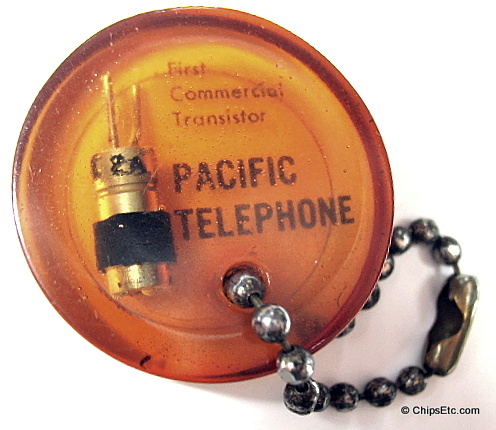 Item #838
This rare Lucite keychain from Pacific Telephone (Bell Telephone System serving California) contains an early Western Electric 2A (type-2) Germanium point contact transistor.
The keychain promotes this as the "First Commercial Transistor". However, the Western Electric 2A was mainly used by Bell Telephone for it's in-house telephone switching equipment, and in a few military applications such as the TRADIC airborne digital computer.
The Western Electric Type-2 was the first transistor to be able to be produced in large quantities. Production started at Western Electric's Allentown Pennsylvania plant in 1951, and by mid 1952 more than 6000 point contact transistors a month were being manufactured. By 1953 the point contact transistor was already being replaced by a more reliable and easier manufactured technology - the grown junction transistor.
Point Contact transistors proved difficult to manufacture, had performance limitations and were unreliable, with some units only lasting for a few months.
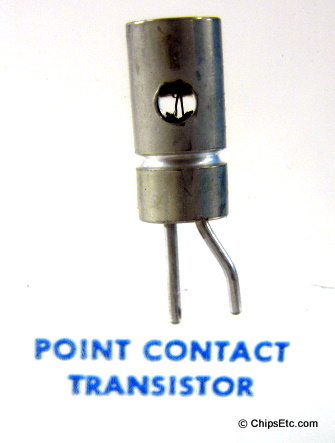
An access hole on the side of the transistor's metal cartridge case allowed for manual adjustment of the fine point contact wires (whiskers) that touch the surface of the Germanium material inside. The example in this keychain shows the completed production version with a protective cover put in place over the access hole.
This is one of the oldest computer technology related keychains in our collection.
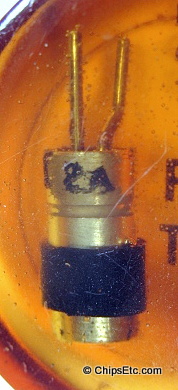
Western Electric 2A Transistor
|

First transistors - July 1952
|
Bell Labs / Western Electric Telephone Transistor Components (1955)
Item #462
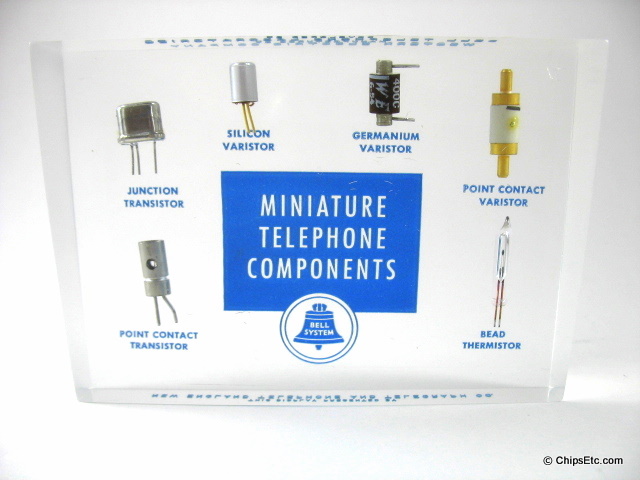
This paperweight was a gift given to some Bell Telephone workers. It contains early Telephone Carrier System components developed at Bell Labs and manufactured by Western Electric for use in the Bell Telephone System.
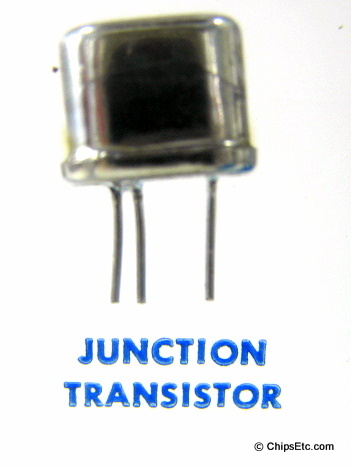
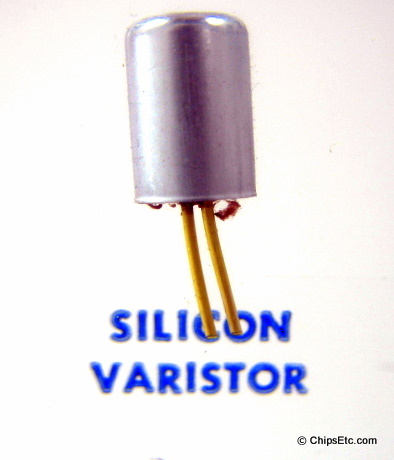
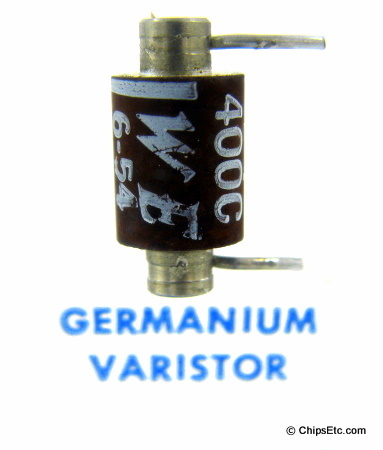
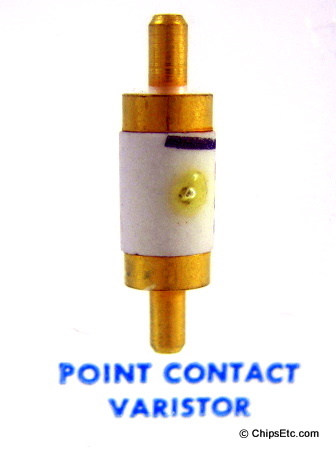
Actual Components include: A Junction Transistor, Point Contact Transistor, Silicon Varistor, Germanium Varistor, and a Bead Thermistor.
Miniature Telephone Components
"Embedded in this plastic display are six examples of the way semiconductors have been put to work to reduce size, increase efficiency and to afford new circuit possibilities in electronic equipment. These particular units were designed for use in telephone equipment. The semiconductor materials used in these devices are germanium, metal oxides, and silicon. The devices, themselves, include transistors, varistors and thermistors, three members of the "istor" family of electronic components - a family whose abilities are already well recognized, and whose future points to many new and promising applications."
Measures 4 1/4" x 3".
Actual Components include: A Junction Transistor, Point Contact Transistor, Silicon Varistor, Germanium Varistor, and a Bead Thermistor.
Miniature Telephone Components
"Embedded in this plastic display are six examples of the way semiconductors have been put to work to reduce size, increase efficiency and to afford new circuit possibilities in electronic equipment. These particular units were designed for use in telephone equipment. The semiconductor materials used in these devices are germanium, metal oxides, and silicon. The devices, themselves, include transistors, varistors and thermistors, three members of the "istor" family of electronic components - a family whose abilities are already well recognized, and whose future points to many new and promising applications."
Measures 4 1/4" x 3".

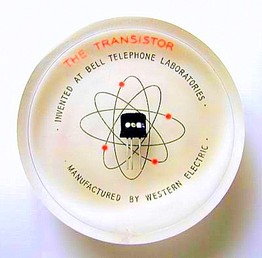
Western Electric "The Transistor" Paperweight (1954)
Sold
A Bell Labs paperweight with an early Germanium NPN Grown Junction Transistor manufactured by Western Electric.
Reads: "The Transistor - Invented at Bell Telephone Laboratories - Manufactured by Western Electric"
Reads: "The Transistor - Invented at Bell Telephone Laboratories - Manufactured by Western Electric"
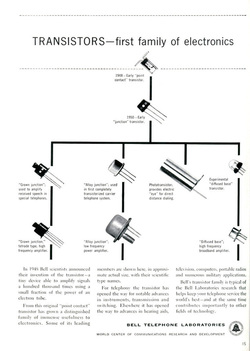
Bell Labs Family of Transistors Ad (1956)
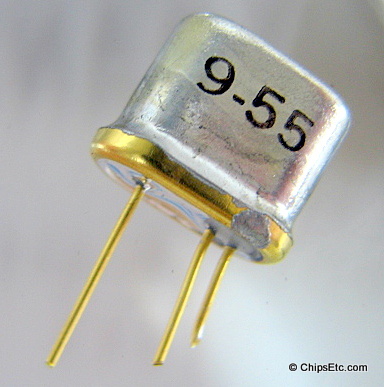
Bell Telephone "The Transistor" Paperweight (1955)

Item #691
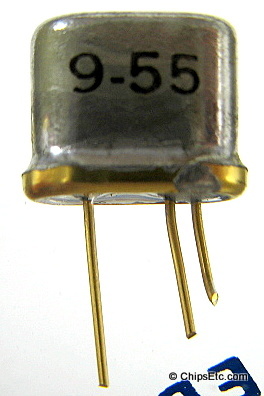
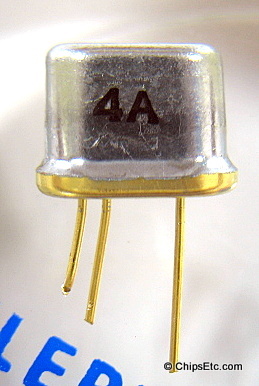
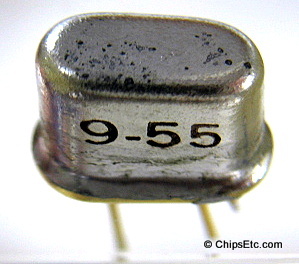
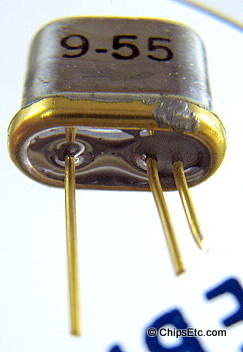
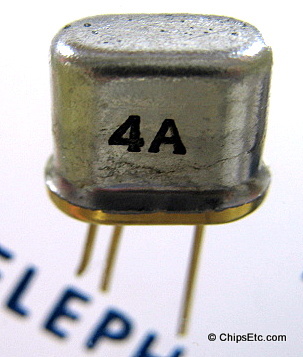
This clear Lucite paperweight from Bell Telephone Company of Pennsylvania paperweight titled "The Transistor - Telephone of Today - 1955" features an early Western Electric 4A Germanium NPN Grown Junction transistor.
This transistor has gold pins and base, with a hand soldered top cap. The date-code stamped on this transistor shows it was manufactured by Western Electric in September 1955.
Measures 2-7/8" Diameter. Comes in original box in new condition.
This transistor has gold pins and base, with a hand soldered top cap. The date-code stamped on this transistor shows it was manufactured by Western Electric in September 1955.
Measures 2-7/8" Diameter. Comes in original box in new condition.


Western Electric "Merrimack Valley Works" Phone Carrier Components (1961)
Item #687
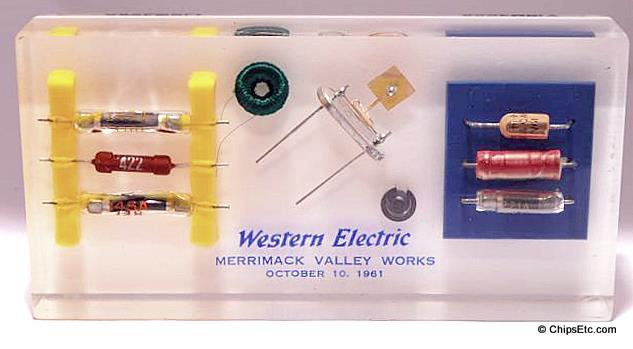
This rare Lucite paperweight contains early examples of Western Electric's MINAPLAS (Miniature Apparatus in Plastic) & AMPLAS (Apparatus Mounted in Plastic) solid state electronics packaging used in AT&T's phone carrier systems in the early 1960's. Components include a Toroidal Coil, a Quartz Crystal & a Ferrite Magnetic Memory Core.
Western Electric's "Merrimack Valley Works" opened in 1953 in North Andover Massachusetts. This production plant employed around 12,000 people at it's peak in 1995. AT&T maintained the facility until 1996.
Reads "Western Electric, Merrimack Valley Works, October 10 1961.
Measures 4 1/2 X 2 1/4 inches.
Western Electric's "Merrimack Valley Works" opened in 1953 in North Andover Massachusetts. This production plant employed around 12,000 people at it's peak in 1995. AT&T maintained the facility until 1996.
Reads "Western Electric, Merrimack Valley Works, October 10 1961.
Measures 4 1/2 X 2 1/4 inches.
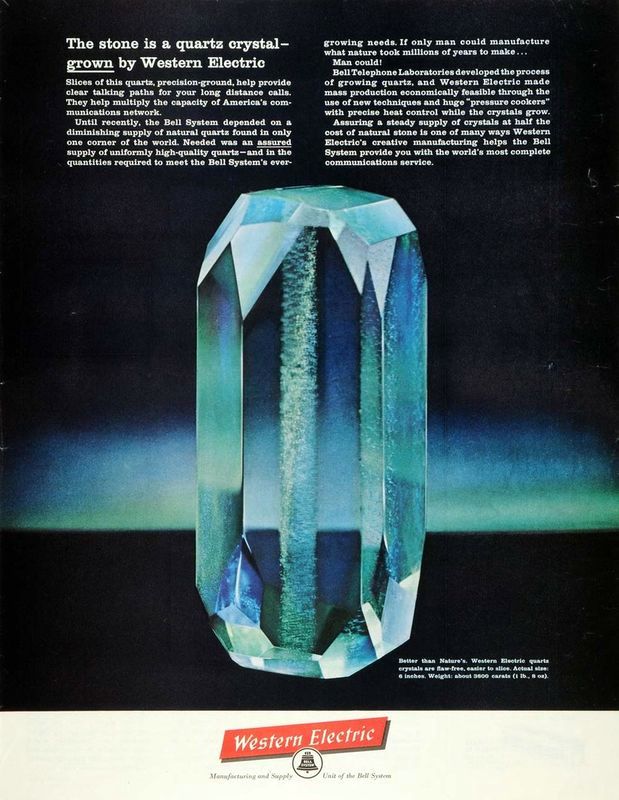 Western Electric quartz crystal ad (1961) |
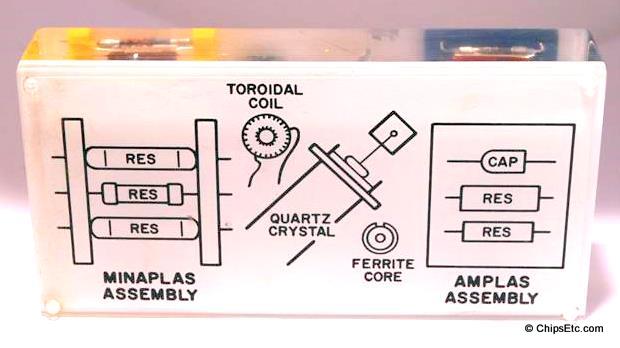 Minaplas (Miniature Apparatus in Plastic) & Amplas (Apparatus Mounted in Plastic) |
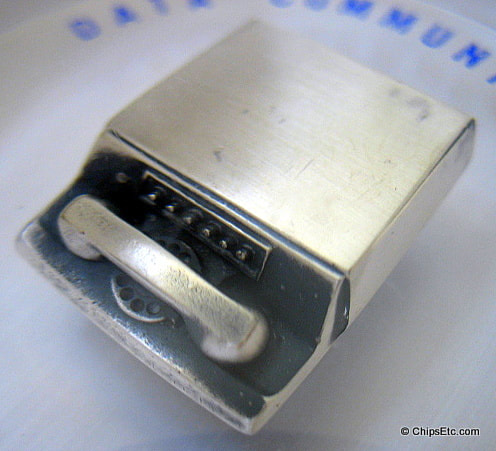
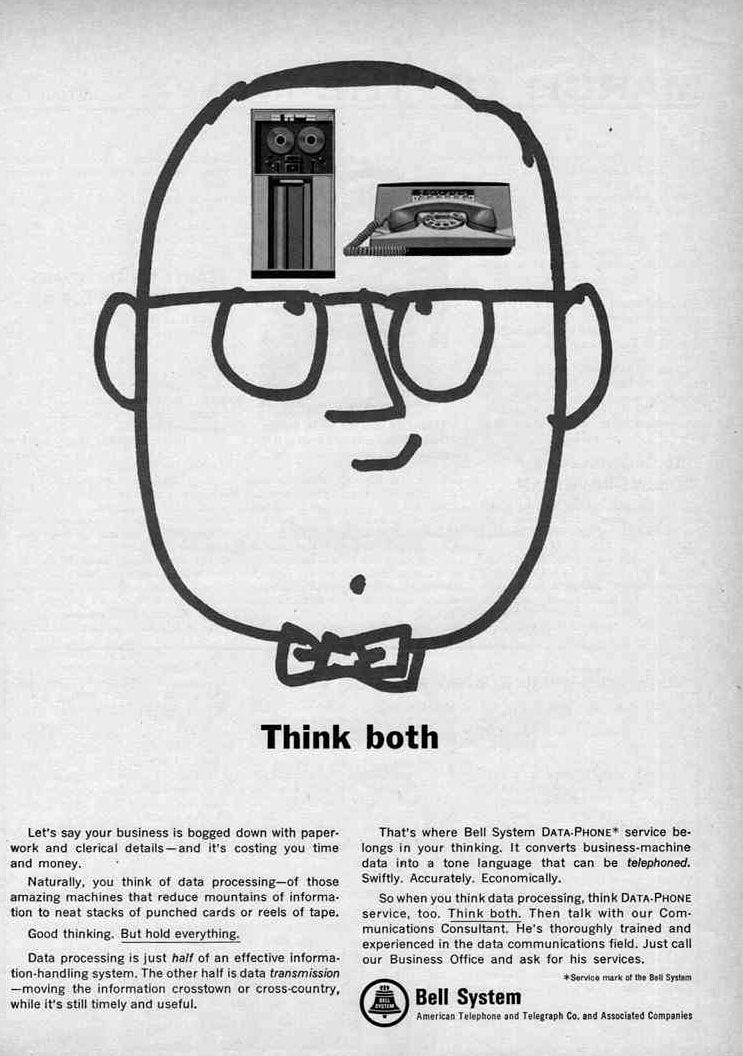
Western Electric / Pacific Telephone Computer Modem / Data Phone (1963)
Item #971
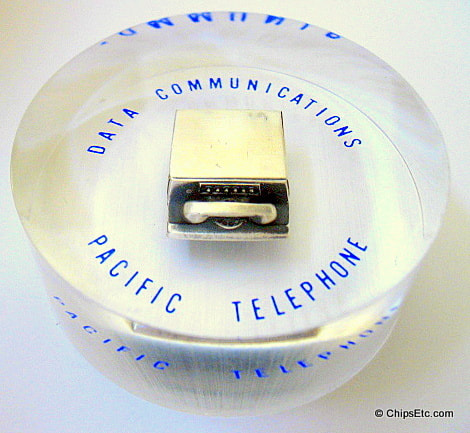
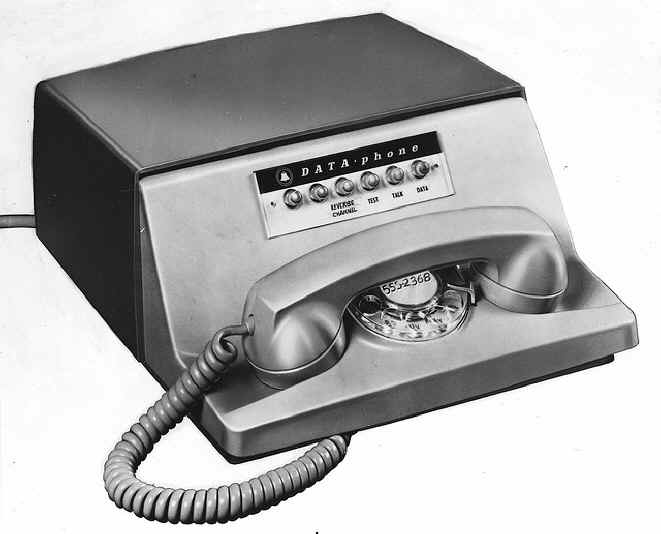
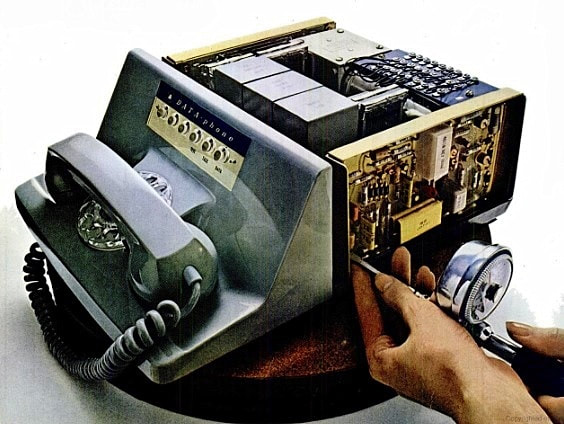
Lucite paperweight from Pacific Telephone (California) that has a cast metal miniature of their new Data Phone embedded inside.
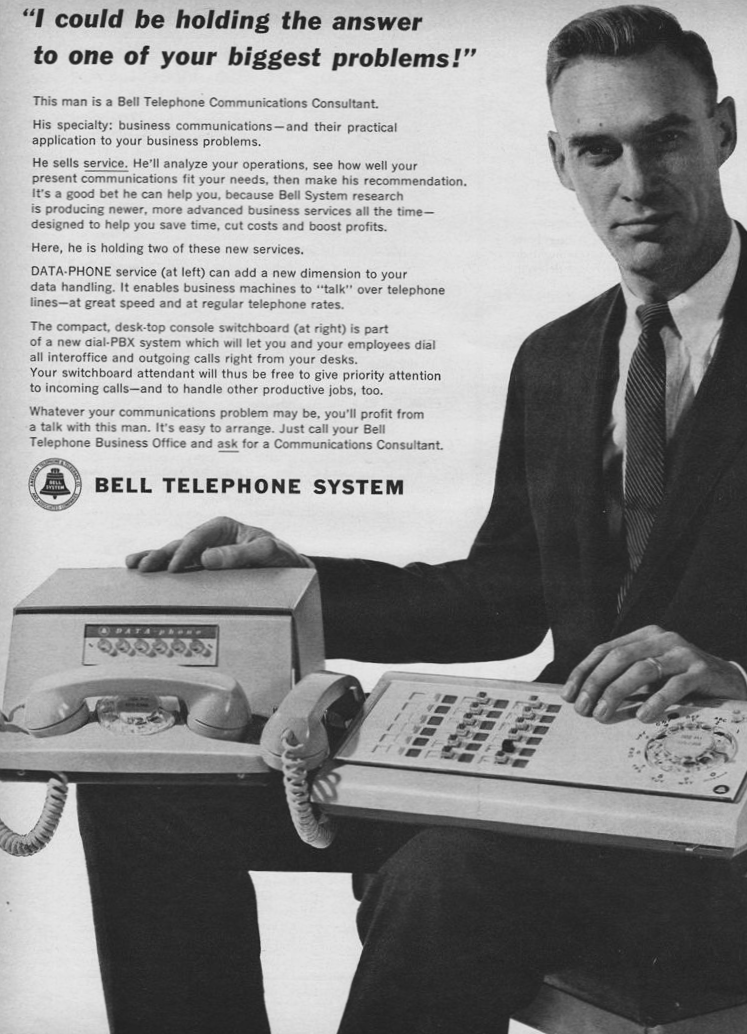
The Data Phone was manufactured by Western Electric for use by the Bell Telephone System. It was an early commercial modem (acoustic coupler). Bell Labs invented the first computer modem (modulator - demodulator) a few years earlier in 1958. A modem converts digital signals to electrical (analog) signals and back, allowing communication between computers.
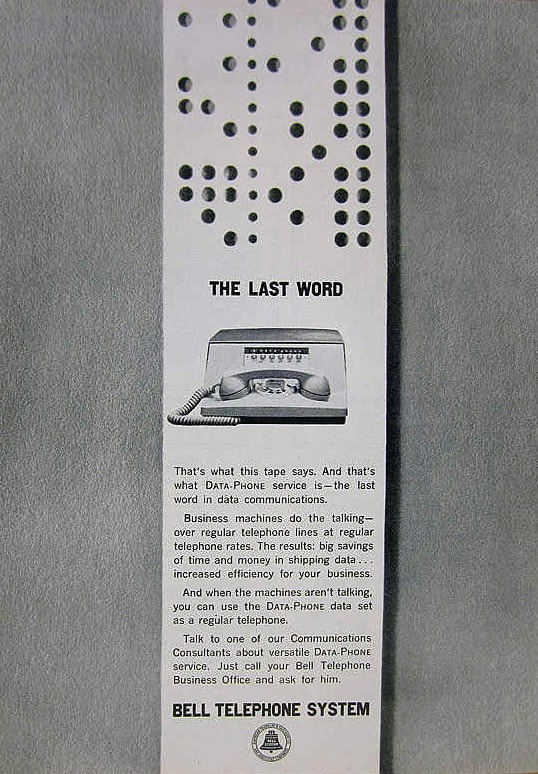
Bell Telephone's Data Phone service was offered to businesses who needed to send data over traditional phone lines at the cost of normal telephone rates, and was touted as being able to send messages 16 times faster than audio messages.
Customer data (Inventories, payroll, orders, sales figures, production data, etc.) was input into the Data Phone via punched card or tape from their local computer.
The Data Phone was manufactured by Western Electric for use by the Bell Telephone System. It was an early commercial modem (acoustic coupler). Bell Labs invented the first computer modem (modulator - demodulator) a few years earlier in 1958. A modem converts digital signals to electrical (analog) signals and back, allowing communication between computers.
Bell Telephone's Data Phone service was offered to businesses who needed to send data over traditional phone lines at the cost of normal telephone rates, and was touted as being able to send messages 16 times faster than audio messages.
Customer data (Inventories, payroll, orders, sales figures, production data, etc.) was input into the Data Phone via punched card or tape from their local computer.




Western Electric Semiconductor Telephone Technology Paperweight (1962)
Item #785
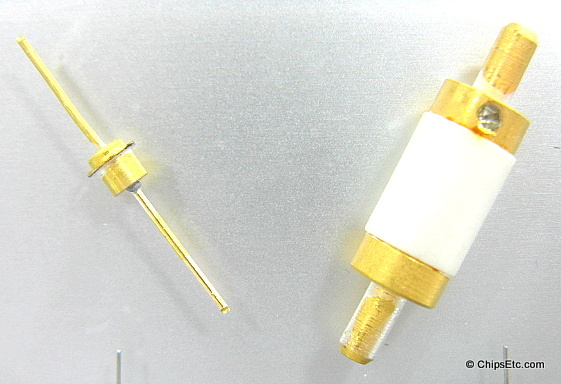
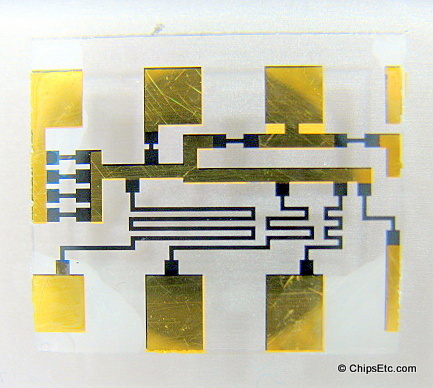
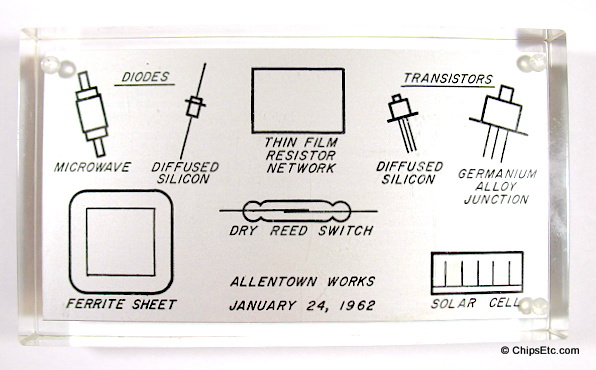
Lucite paperweight featuring numerous Western Electric technologies from their Allentown Works facility.
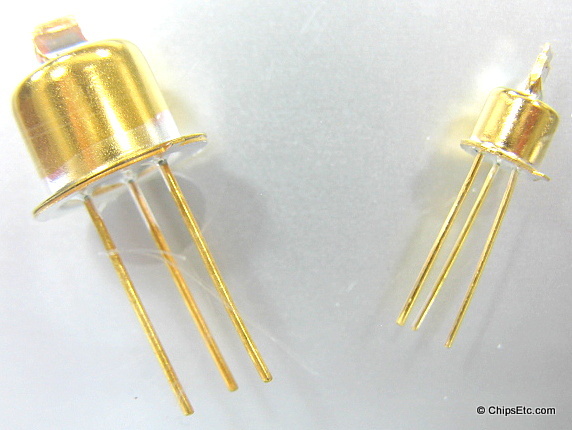
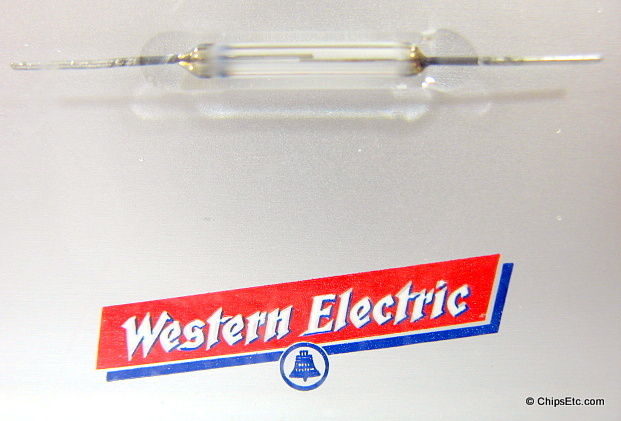
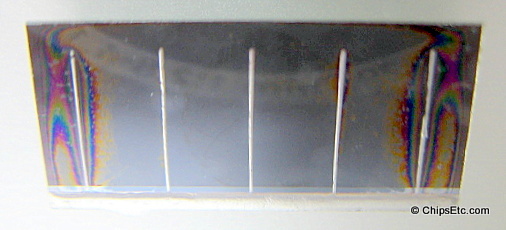
Items shown include Western Electric diffused silicon and germanium alloy junction gold transistors, microwave & diffused silicon diodes, dry reed switch, solar cell, thin film resistor network, & an 8-Bit ferrite magnetic memory sheet.
These are all the essential electronic components which would be used to create the Bell Telephone System 1ESS switching network - the worlds first large-scale digital telephone exchange system in 1965.
Items shown include Western Electric diffused silicon and germanium alloy junction gold transistors, microwave & diffused silicon diodes, dry reed switch, solar cell, thin film resistor network, & an 8-Bit ferrite magnetic memory sheet.
These are all the essential electronic components which would be used to create the Bell Telephone System 1ESS switching network - the worlds first large-scale digital telephone exchange system in 1965.

Bell Labs 2N "The Transistor" Paperweight (1962)

Item #013
In 1962 Bell Telephone Systems debuted the first paging system at the Seattle World’s Fair. Called "Bellboy", the personal pager is one of the very first consumer applications to make use of the transistor. An audible signal alerts customers, who then call their offices or homes from a regular phone to retrieve their messages.
Other new technologies showcased at the Bell Telephone exhibit included next generation phone system capabilities including touch tone dialing, 3-way calling, call waiting, call forwarding, cordless phones, data phones, coaxial cable, and advanced electronic system switching.
Elsewhere in 1962, the First commercial digital transmission system is Introduced. Illinois Bell turns on the first commercial digital transmission system, known as the T1 (Transmission One), which eventually replaces analog transmission lines. The multiplexed system carrying voice signals has a total capacity of 1.5 million bits per second and is less susceptible to electrical interference from high-tension wires. The T1 quickly becomes the main transmission system for long-distance telephone service and, eventually, local calls.
This paperweight was a souvenir sold at the Seattle worlds fair in 1962 as part of Bell Telephones "Phones of the Future" exhibit & contains an early, gold plated Western Electric 2N Series, PNP Alloy Junction, germanium transistor (circa 1959) encased in Lucite. The paperweight has atomic element theme in the background with the transistor encased in Lucite and states "Invented at Bell Laboratories / A result of Basic research".
Measures 2 7/8" across x 1 3/16" thick.
Other new technologies showcased at the Bell Telephone exhibit included next generation phone system capabilities including touch tone dialing, 3-way calling, call waiting, call forwarding, cordless phones, data phones, coaxial cable, and advanced electronic system switching.
Elsewhere in 1962, the First commercial digital transmission system is Introduced. Illinois Bell turns on the first commercial digital transmission system, known as the T1 (Transmission One), which eventually replaces analog transmission lines. The multiplexed system carrying voice signals has a total capacity of 1.5 million bits per second and is less susceptible to electrical interference from high-tension wires. The T1 quickly becomes the main transmission system for long-distance telephone service and, eventually, local calls.
This paperweight was a souvenir sold at the Seattle worlds fair in 1962 as part of Bell Telephones "Phones of the Future" exhibit & contains an early, gold plated Western Electric 2N Series, PNP Alloy Junction, germanium transistor (circa 1959) encased in Lucite. The paperweight has atomic element theme in the background with the transistor encased in Lucite and states "Invented at Bell Laboratories / A result of Basic research".
Measures 2 7/8" across x 1 3/16" thick.
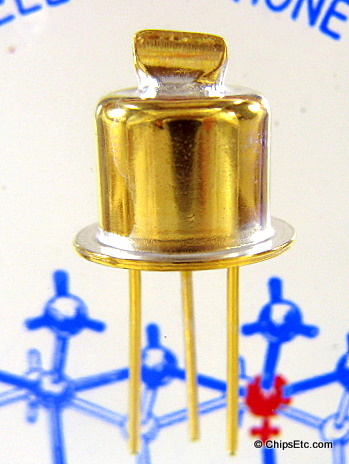
Close-up of the Western Electric 2N Alloy Junction transistor
VIDEO: Bell Telephone Labs & the Transistor at the Seattle Worlds Fair (1962)
Western Electric Laureldale Plant Transistors (Late 1950s - Early 1960s)

Sold
This Lucite cube contains various Western Electric Gold Plated transistors manufactured at their Laureldale Pennsylvania manufacturing plant.
In 1958 the first U.S. space satellite, Explorer I, was launched from Cape Canaveral in Florida. It contained Western Electric transistors made in the Laureldale plant.
In 1958 the first U.S. space satellite, Explorer I, was launched from Cape Canaveral in Florida. It contained Western Electric transistors made in the Laureldale plant.
Western Electric 6028 WE408A Vacuum Tube (1954)
Sold
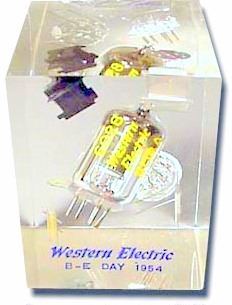
This Lucite paperweight has a Western Electric WE408A Vacuum tube inside.
The Western Electric 6028/408A is a 7-pin miniature pentode with an indirectly heated cathode that was very popular in sound system pre-amp's.
The Western Electric 6028/408A is a 7-pin miniature pentode with an indirectly heated cathode that was very popular in sound system pre-amp's.
|
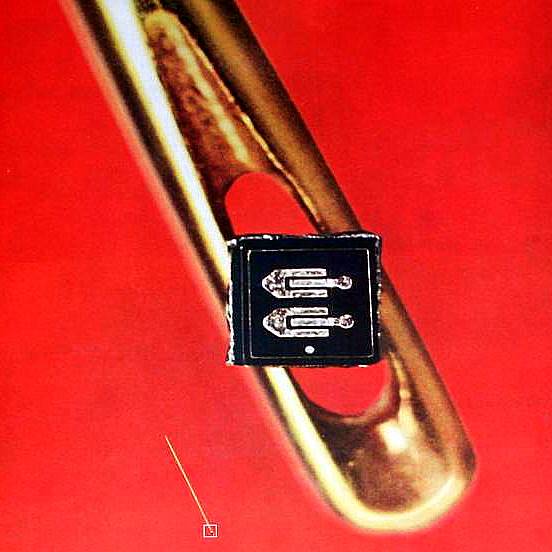
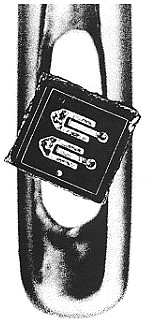 Bell Labs Chip on the end of a needle (1964) |
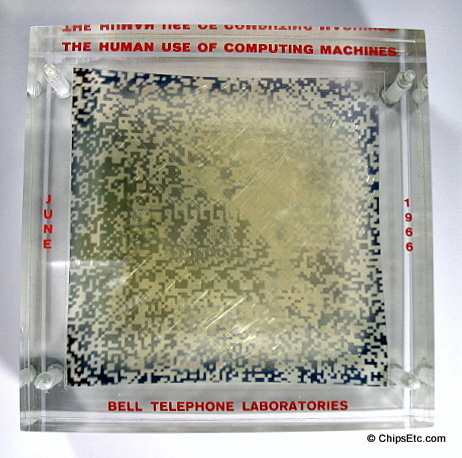
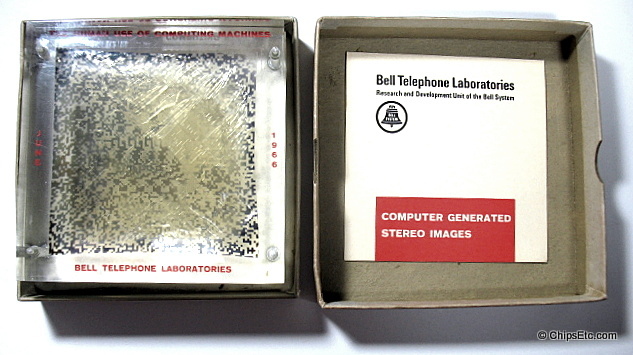
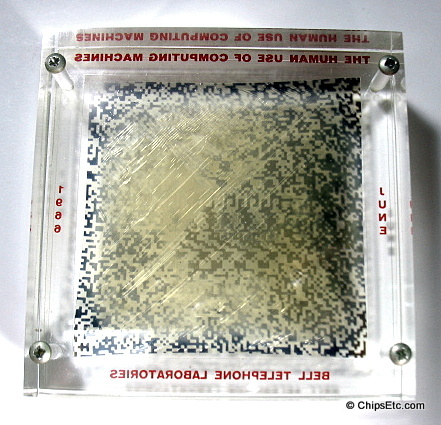
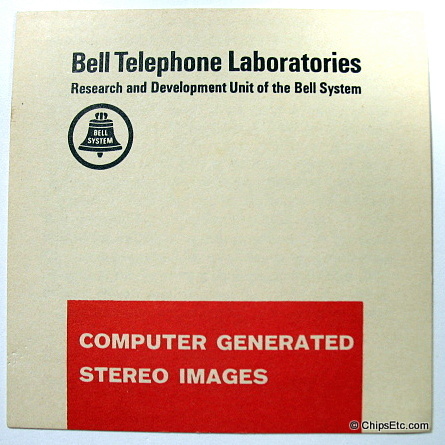
Bell Labs "Human Use of Computing Machines" Computer Generated Stereo Image (1966)
Item #885
On June 21 1966, AT&T's Bell Laboratories hosted a 2-day symposium on the "Human Use of Computing Machines" in Murray Hill, New Jersey. The symposium's goal was to discuss Diverse Ways of Enhancing Perception and Intuition in computing.
This is a rare Lucite paperweight given to the 200 attendees at that event whom were composed mostly of representatives and presidents of over 100 U.S. Universities.
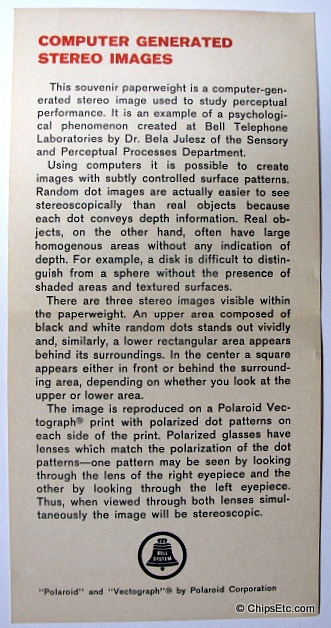
The Lucite paperweight features a computer generated 3-D stereo image using Polaroid's Vectograph process on a piece of celluloid that was prepared by Bell Labs to showcase their research into the Human use of computing machines in the 1960s.
Dated June 1966, includes original gift box, Lucite paperweight, original information card by the Research and Development Unit of the Bell System. Measures 3 3/4" by 3 3/4".
This is a rare Lucite paperweight given to the 200 attendees at that event whom were composed mostly of representatives and presidents of over 100 U.S. Universities.
The Lucite paperweight features a computer generated 3-D stereo image using Polaroid's Vectograph process on a piece of celluloid that was prepared by Bell Labs to showcase their research into the Human use of computing machines in the 1960s.
Dated June 1966, includes original gift box, Lucite paperweight, original information card by the Research and Development Unit of the Bell System. Measures 3 3/4" by 3 3/4".
"Thus our nation, and to some degree mankind altogether, have become trustees for one of the heroic capabilities so far evolved from science and engineering - that of the giant computing machine and its associated networks of interactions and man-machine complementarities."
William O. Baker - President of Bell Labs, during his closing remarks at the "Human Use of Computing Machines" Symposium - July 22nd 1966
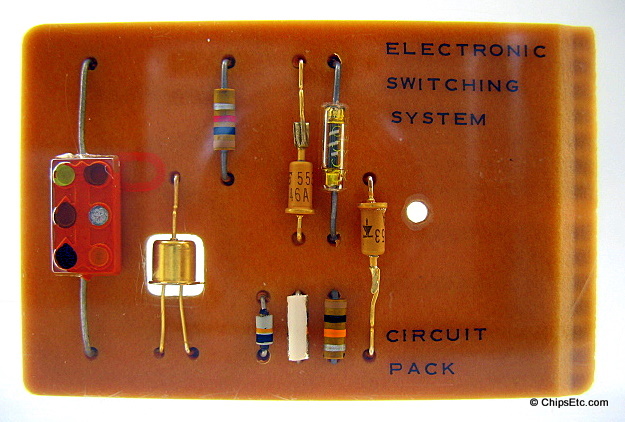
Indiana Bell Telephone ESS Switching System Transistor Circuit Board (1966)
Item #599
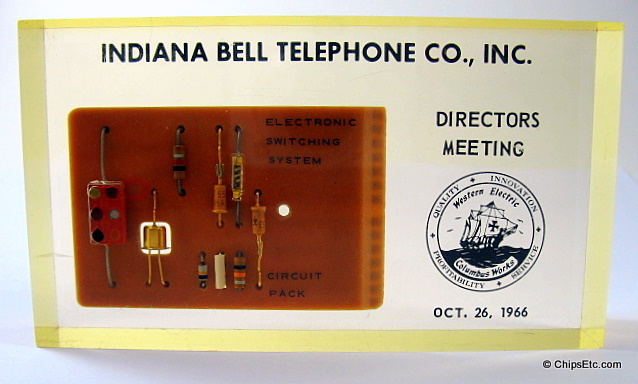
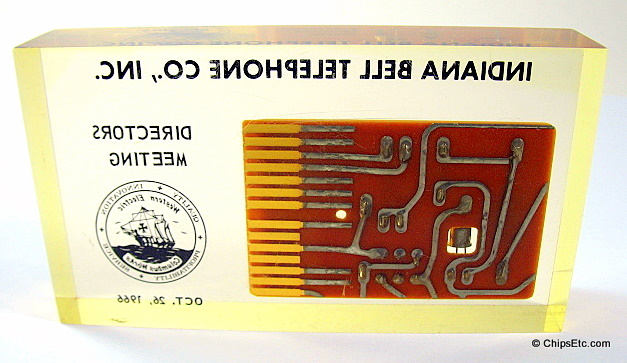
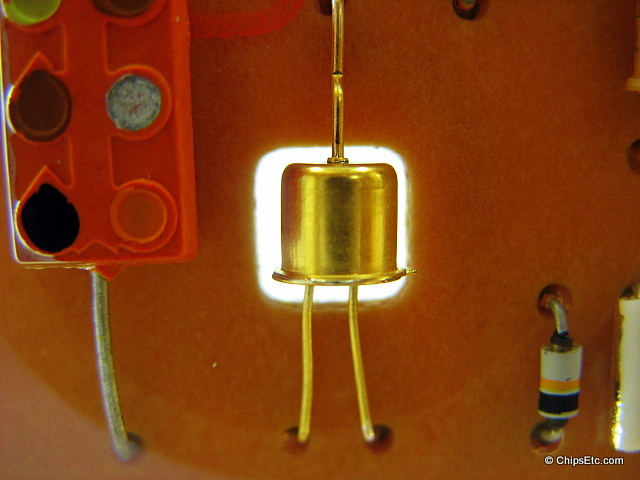
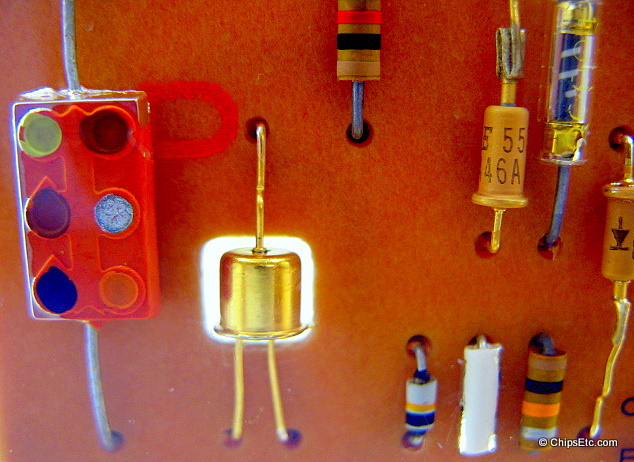
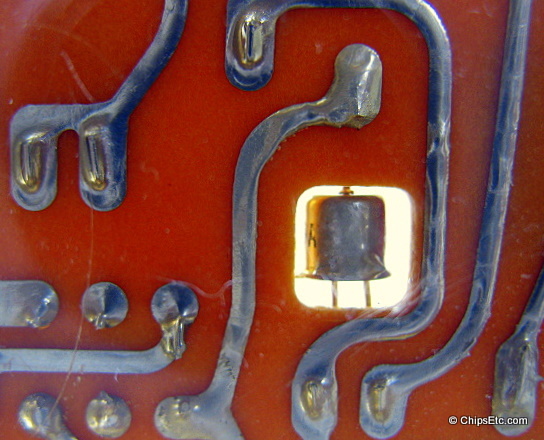
This is a rare Indiana Bell Telephone Directors Meeting "Columbus works" Lucite paperweight. Embedded inside is a an early Western Electric Electronic Switching System (ESS) circuit board with gold contacts that contains with a gold plated Western Electric transistor and various other Western Electric solid state components.
Transistors were first used in the telephone industry in signaling devices & amplifiers for telephone repeaters. Bell system first used transistors in 1953 with it's "card translator", a device used for selecting trunk routes in trunk exchanges.
The "Columbus Works" plant located in Columbus, Ohio was opened in 1957 by AT&T's telephone-equipment maker, Western Electric, and eventually grew to house more than 12,000 workers. The Columbus Works manufacturing plant was eventually closed by Alcatel-Lucent in late 2008.
Paperweight is dated October 26, 1966 and features the Western Electric "Columbus Works" logo.
Measures 4-1/2 X 2-1/2 X 3/4"
From the original recipient of this piece
"I worked in a step office at 3rd & Indian school road in Phoenix {AZ} in 1966 & by 1968 it was the 1st ESS in the state". Aug. 2011
Transistors were first used in the telephone industry in signaling devices & amplifiers for telephone repeaters. Bell system first used transistors in 1953 with it's "card translator", a device used for selecting trunk routes in trunk exchanges.
The "Columbus Works" plant located in Columbus, Ohio was opened in 1957 by AT&T's telephone-equipment maker, Western Electric, and eventually grew to house more than 12,000 workers. The Columbus Works manufacturing plant was eventually closed by Alcatel-Lucent in late 2008.
Paperweight is dated October 26, 1966 and features the Western Electric "Columbus Works" logo.
Measures 4-1/2 X 2-1/2 X 3/4"
From the original recipient of this piece
"I worked in a step office at 3rd & Indian school road in Phoenix {AZ} in 1966 & by 1968 it was the 1st ESS in the state". Aug. 2011


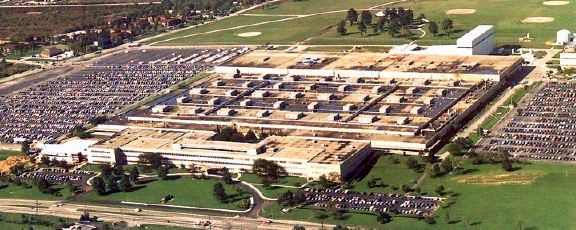 Aerial view of the Western Electric "Columbus Works" plant - Columbus, Ohio (1980's) |
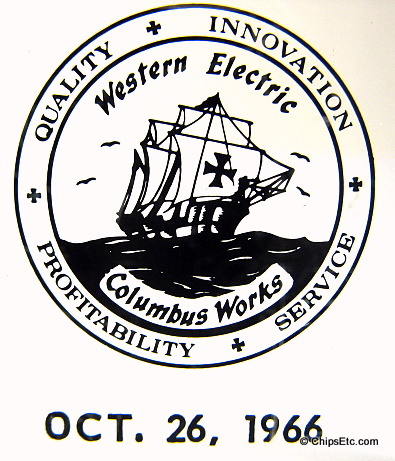 Western Electric "Columbus Works" logo (1966) |
AT&T /Bell Labs TELSTAR Communications Satellite Technology (1962)

Sold
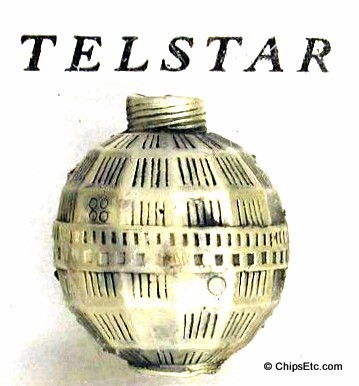
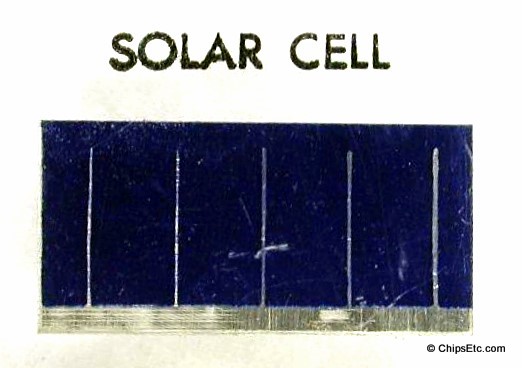
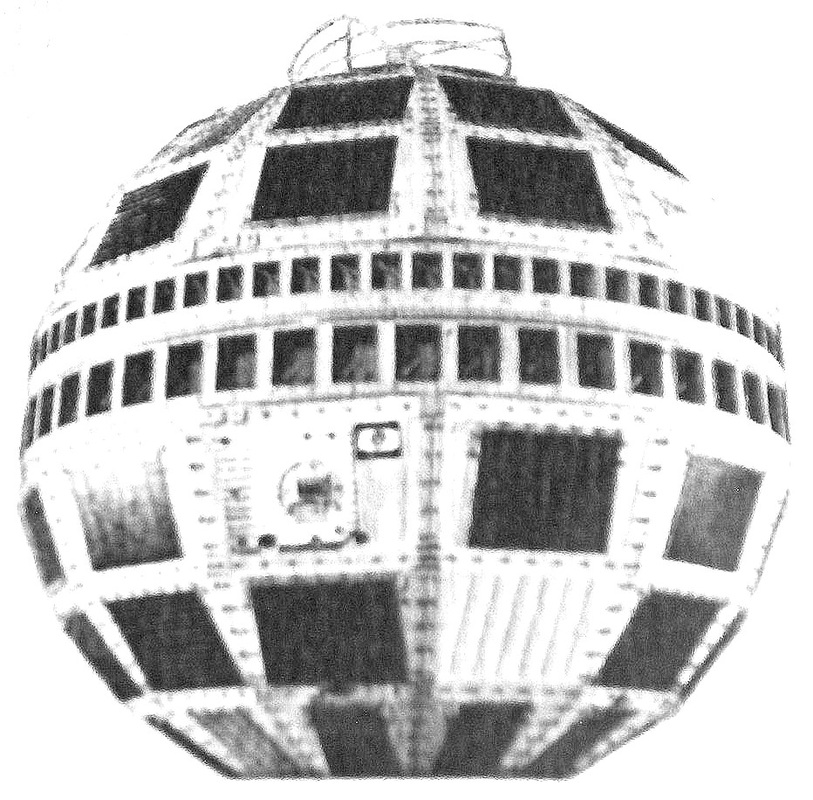
Lucite paperweight from AT&T features examples of Bell Labs technology components used in the Telstar communications satellite: an alloy junction gold transistor and early solar cell. Development of the Telstar satellite became achievable in the early 1960's because of the of many technologies that Bell Labs had developed & patented over the previous 25 years.
Telstar was the world's first satellite to relay television & telephone signals. It was launched by NASA into elliptical orbit on top of a Thor-Delta rocket on July 10, 1962 from Cape Canaveral.
See where the Telstar 1 Satellite is in the sky right now!
Telstar was the world's first satellite to relay television & telephone signals. It was launched by NASA into elliptical orbit on top of a Thor-Delta rocket on July 10, 1962 from Cape Canaveral.
See where the Telstar 1 Satellite is in the sky right now!
Bell Labs Telephone Communications Circuit Board (1966)
Item #506
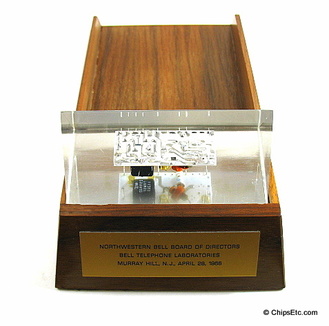
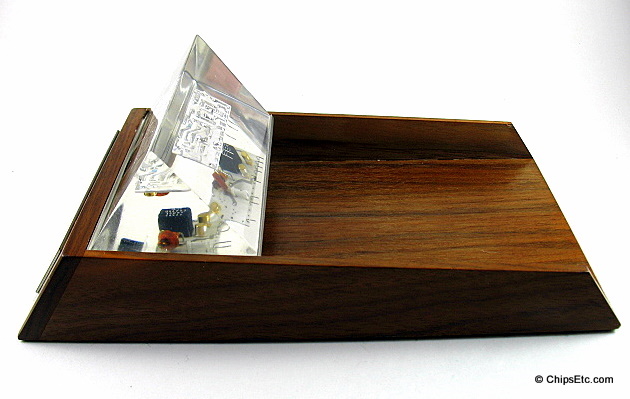
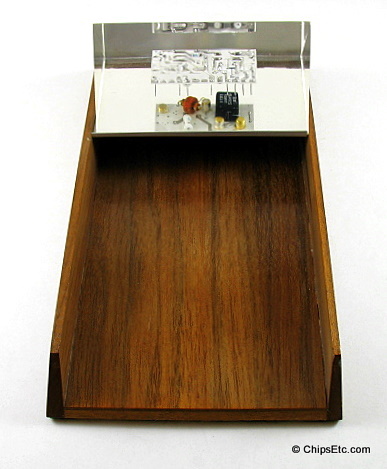
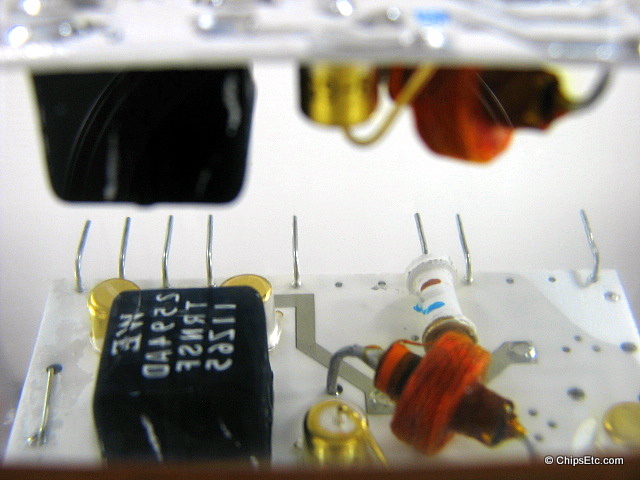
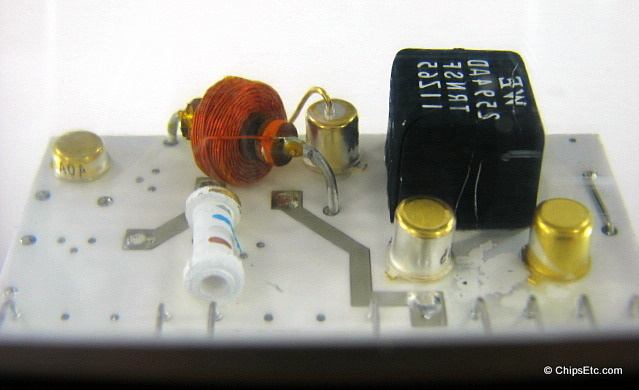
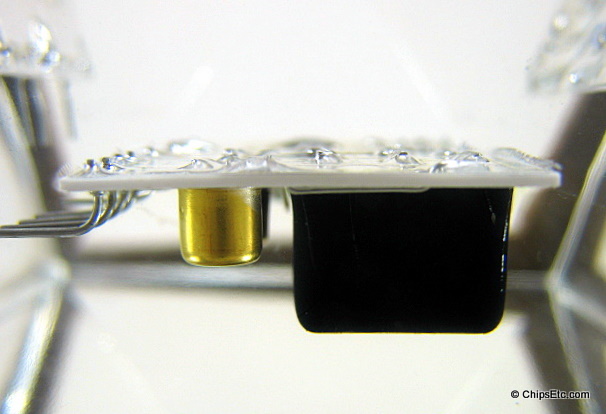
This is a walnut memo tray from Bell Labs that has a telephone
communications circuit board embedded in Lucite that contains Western Electric gold transistors and various other solid state components.
Brass plaque on front reads: "Northwestern Bell Board of Directors, Bell Telephone Laboratories Murray Hill, New Jersey, April 28, 1966".
Measures 5" wide x 9" deep x 3" tall. Bottom is covered in green felt.
Brass plaque on front reads: "Northwestern Bell Board of Directors, Bell Telephone Laboratories Murray Hill, New Jersey, April 28, 1966".
Measures 5" wide x 9" deep x 3" tall. Bottom is covered in green felt.

Bell Labs Touch-Tone Generator Integrated Circuit Paperweight (1966)
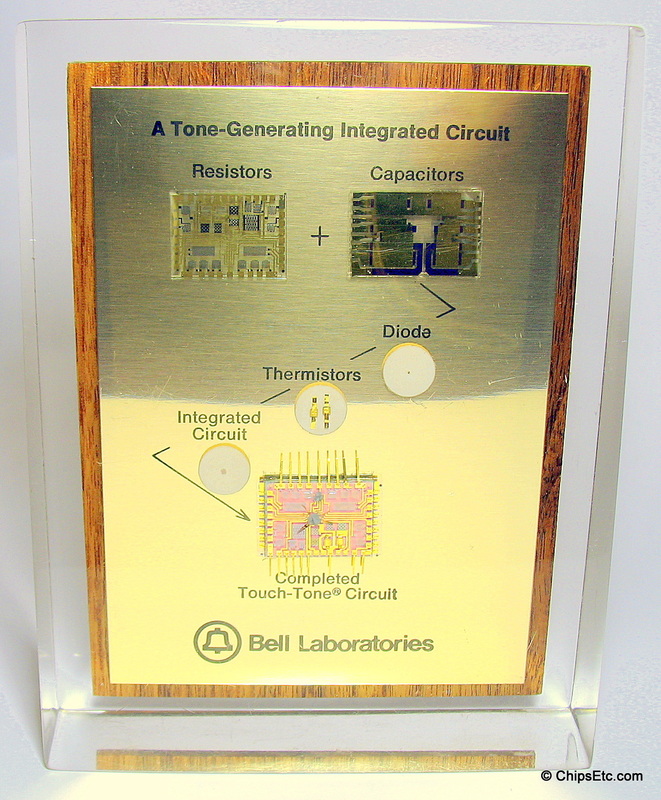
Item #755
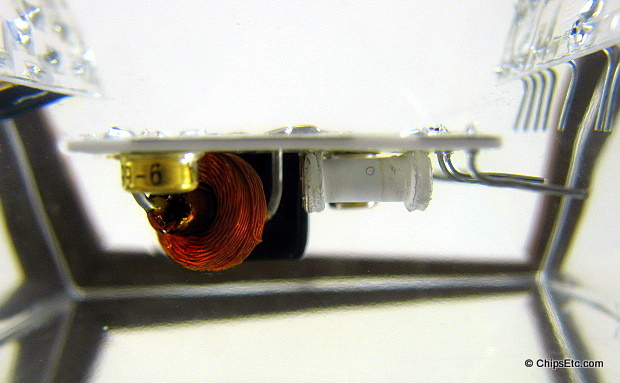
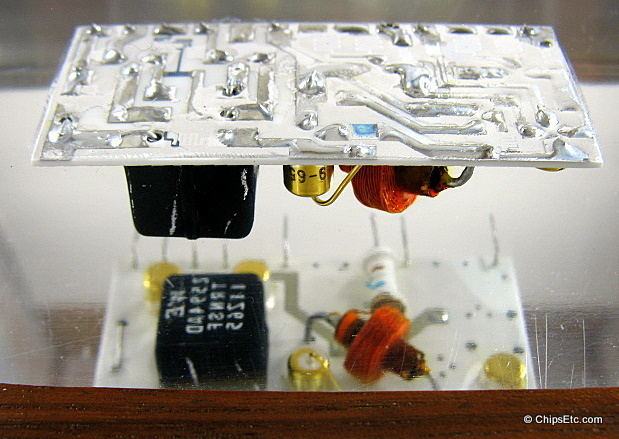
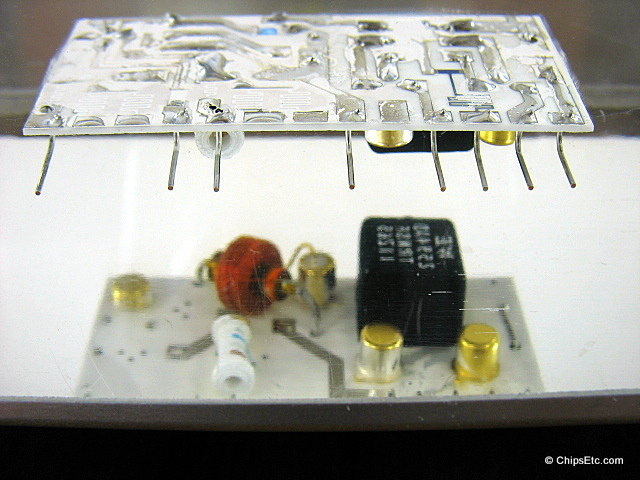
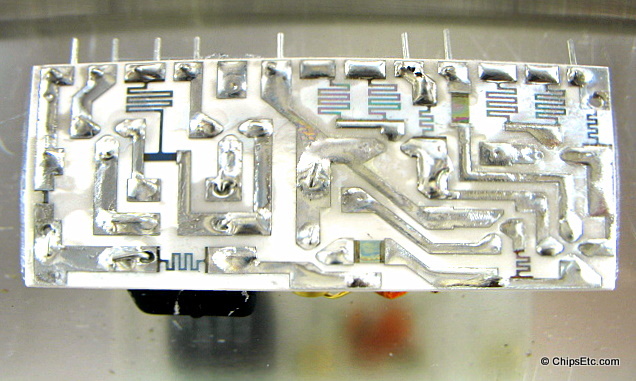
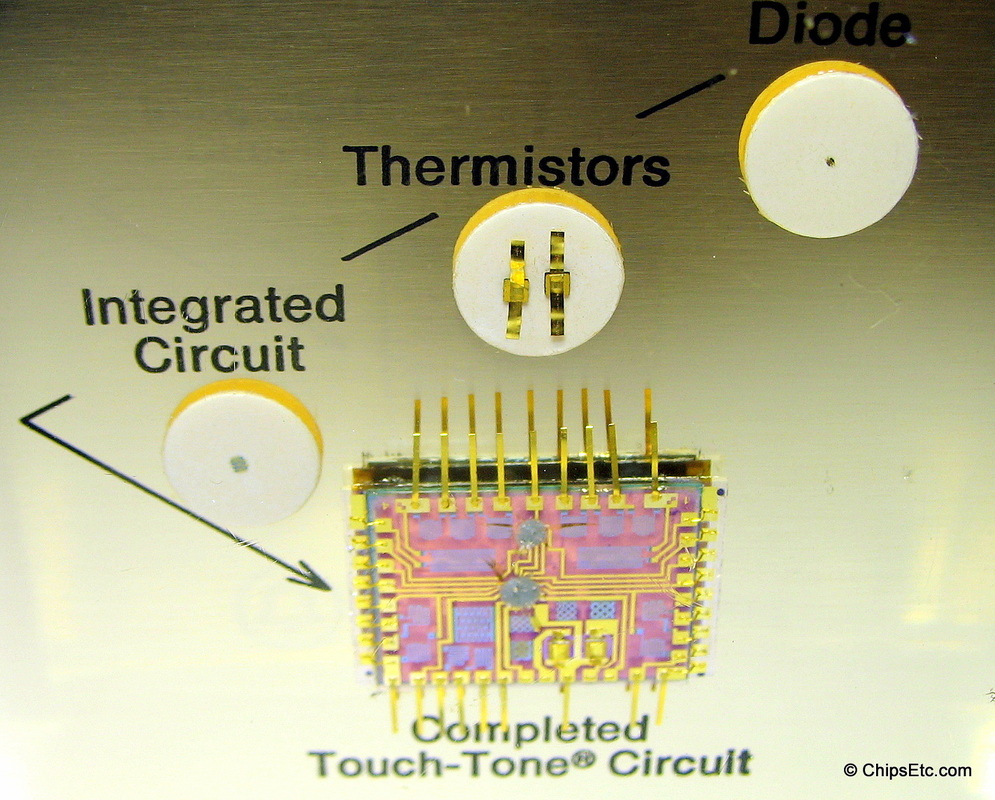
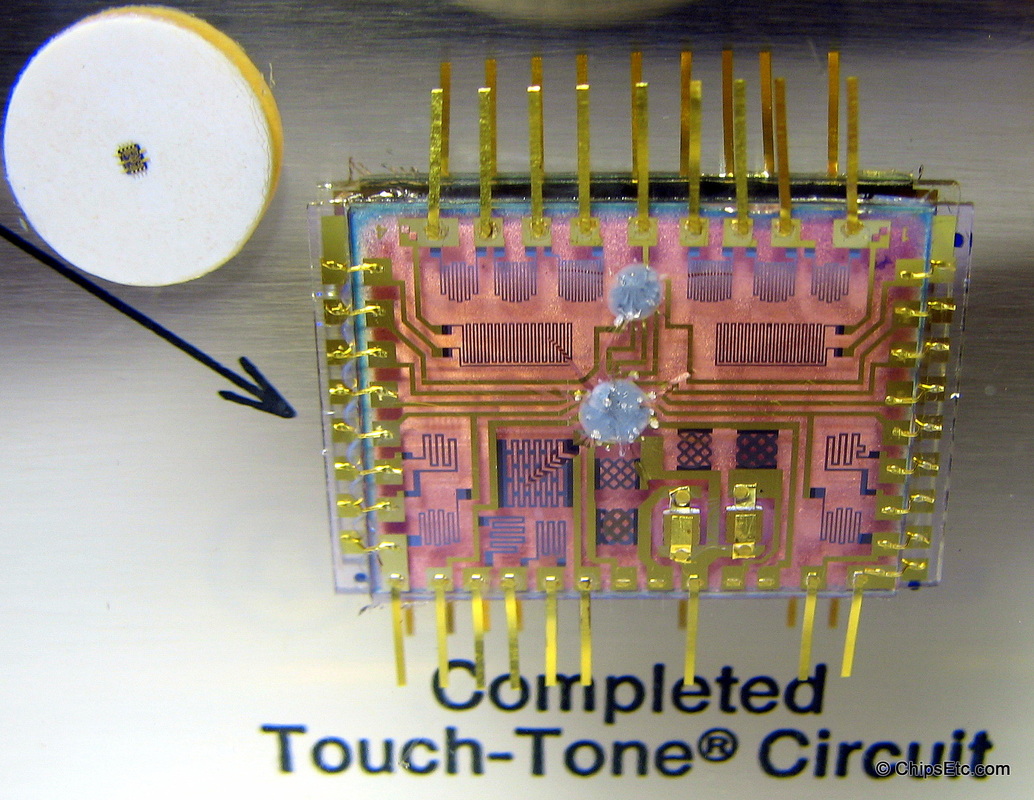
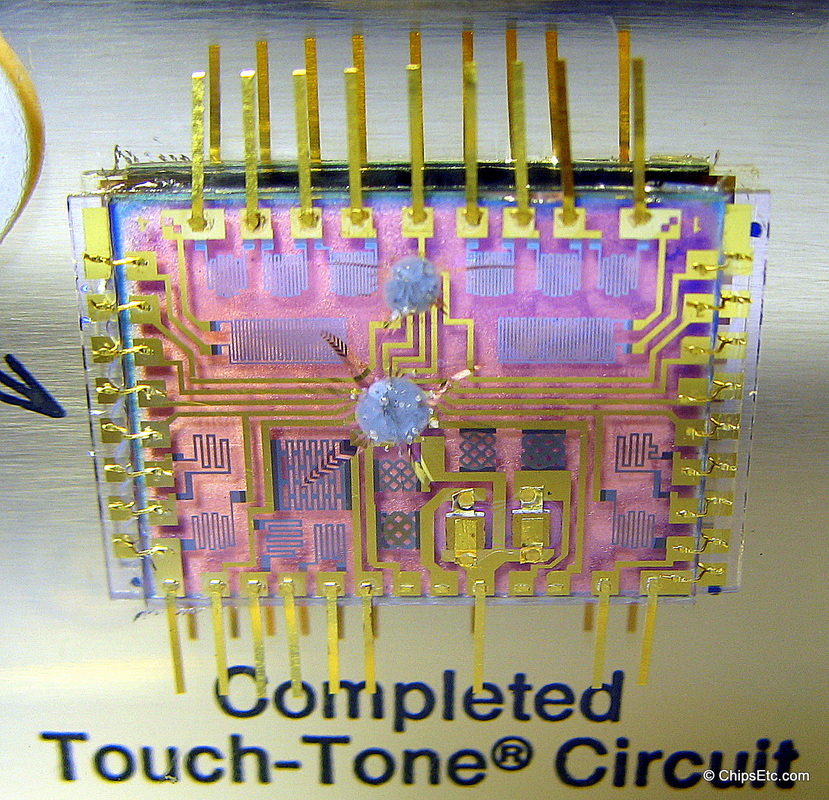
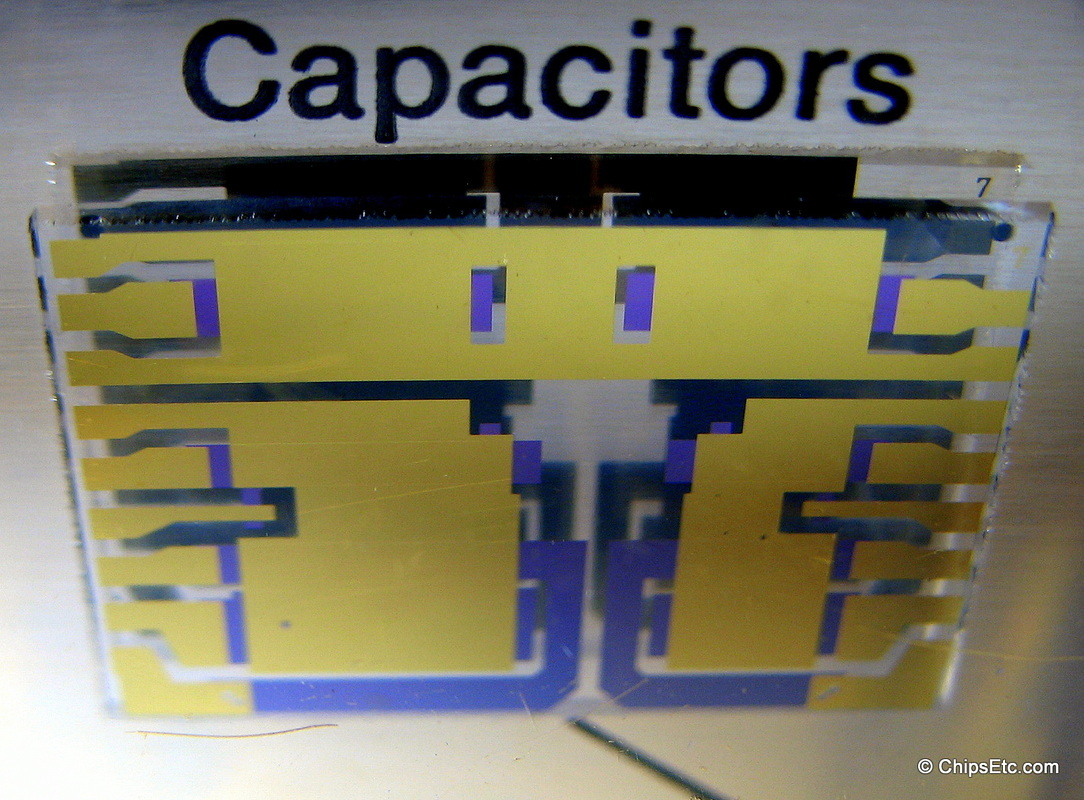
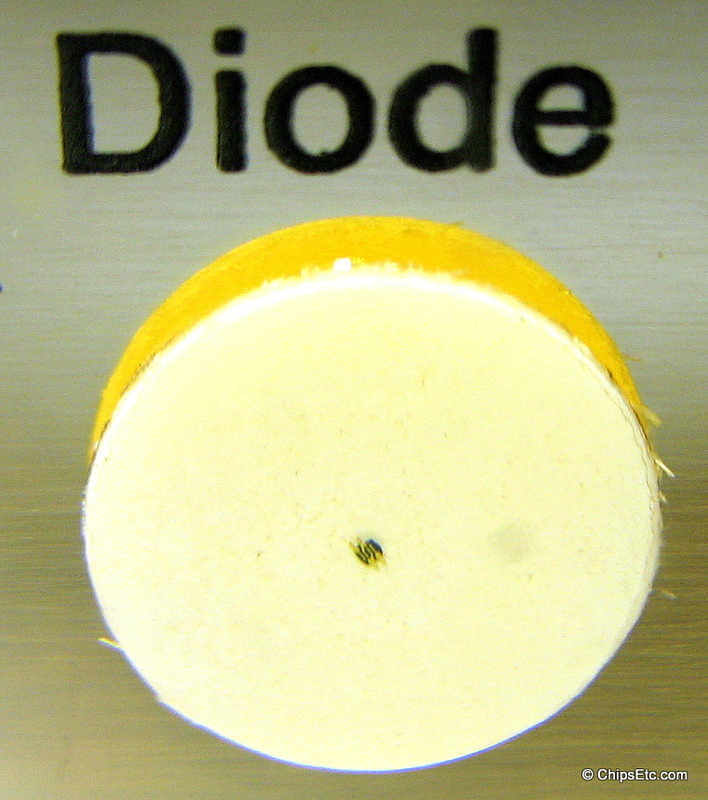
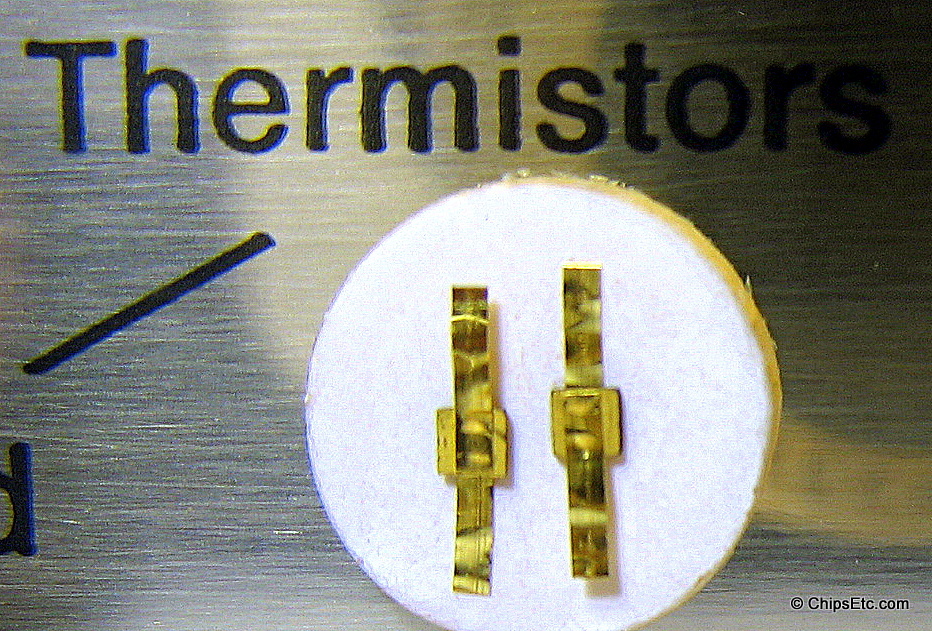
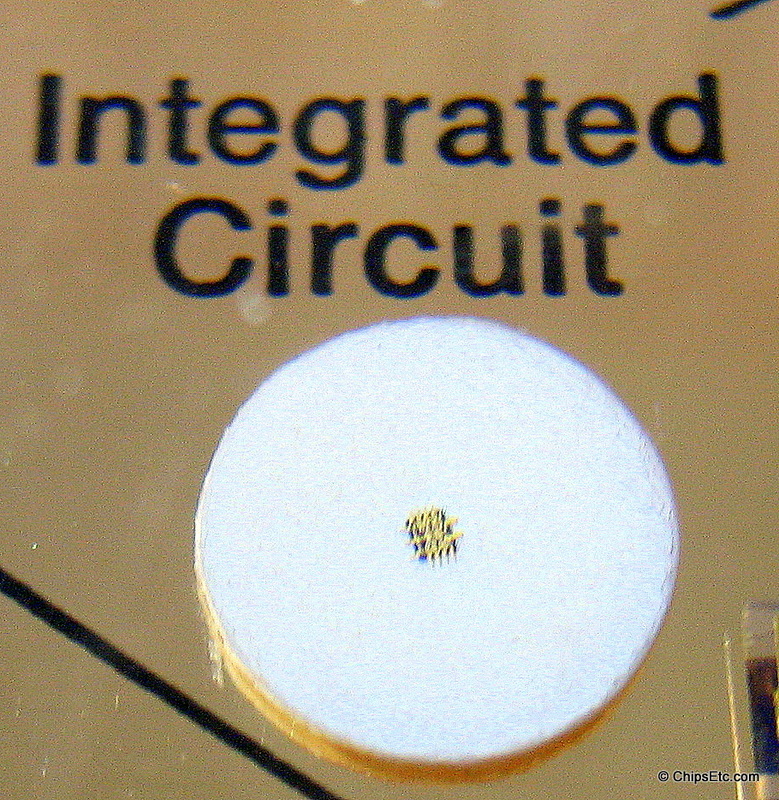
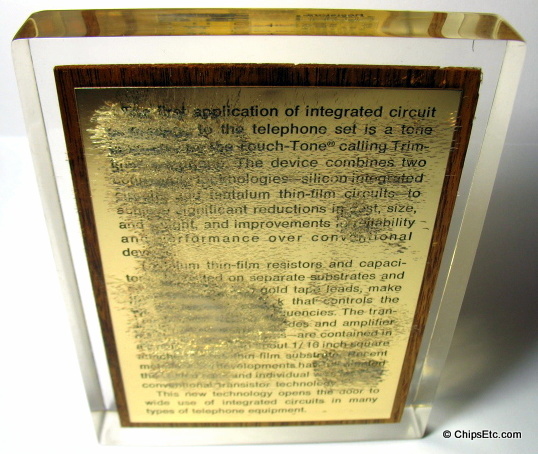
This Lucite paperweight from Bell Laboratories shows the steps to manufacture their Touch-Tone Generating Integrated Circuit used in their first line of "Trimline" model Touch-Tone phones.
Steps shown include the separate thin-film layers containing resistors and capacitors, as well as individual components including a diode, thermistors, and an integrated circuit.
"The first application of integrated circuit technology to the telephone set is a tone generator for the Touch-Tone calling Trendline telephone. The device combines two compatible technologies - silicon and integrated circuits and tantalum thin-film circuits - to achieve significant reductions in cost, size, and weight, and improvements in reliability and performance over conventional devices.
Tantalum thin-film resistors and capacitors, deposited on separate substrates and interconnected with gold tape leads, make up the passive network that controls the Touch-Tone calling frequencies. The transistors, power Supply diodes and amplifier resistors - 24 components - are contained in a single chip about one 1/16th square attached to the thin-film substrate. Recent metallurgical developments have eliminated the sealed cans and individual wire leads of conventional transistor technology.
This new technology opens the door to wide use of integrated circuits in many types of telephone equipment."
Steps shown include the separate thin-film layers containing resistors and capacitors, as well as individual components including a diode, thermistors, and an integrated circuit.
"The first application of integrated circuit technology to the telephone set is a tone generator for the Touch-Tone calling Trendline telephone. The device combines two compatible technologies - silicon and integrated circuits and tantalum thin-film circuits - to achieve significant reductions in cost, size, and weight, and improvements in reliability and performance over conventional devices.
Tantalum thin-film resistors and capacitors, deposited on separate substrates and interconnected with gold tape leads, make up the passive network that controls the Touch-Tone calling frequencies. The transistors, power Supply diodes and amplifier resistors - 24 components - are contained in a single chip about one 1/16th square attached to the thin-film substrate. Recent metallurgical developments have eliminated the sealed cans and individual wire leads of conventional transistor technology.
This new technology opens the door to wide use of integrated circuits in many types of telephone equipment."

Western Electric Allentown Vacuum Tube Paperweight (1972)
Item #751
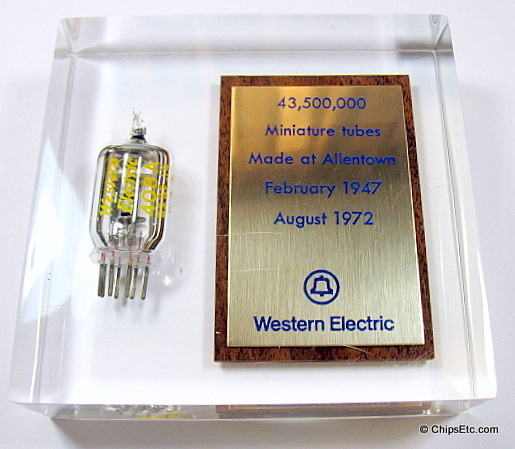
This Lucite paperweight features a real Western Electric 408A Vacuum Tube made at Allentown.
Reads "43,500,00 Miniature tubes Made at Allentown, February 1947, August 1972".
Reads "43,500,00 Miniature tubes Made at Allentown, February 1947, August 1972".
Western Electric Integrated Circuit Chip Keychain (1970)
Item #892
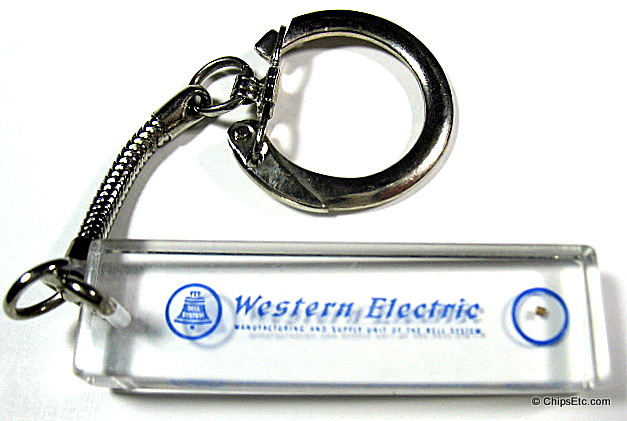
Lucite keychain from Western Electric contains a very small early Integrated Circuit chip embedded inside.
Small IC's such as this one were typically used in Western Electric's Hybrid Integrated Circuit packages made up of multiple IC's and electronic components all mounted on a single package.
Reads "Manufacturing and supply unit of the Bell System".
Small IC's such as this one were typically used in Western Electric's Hybrid Integrated Circuit packages made up of multiple IC's and electronic components all mounted on a single package.
Reads "Manufacturing and supply unit of the Bell System".
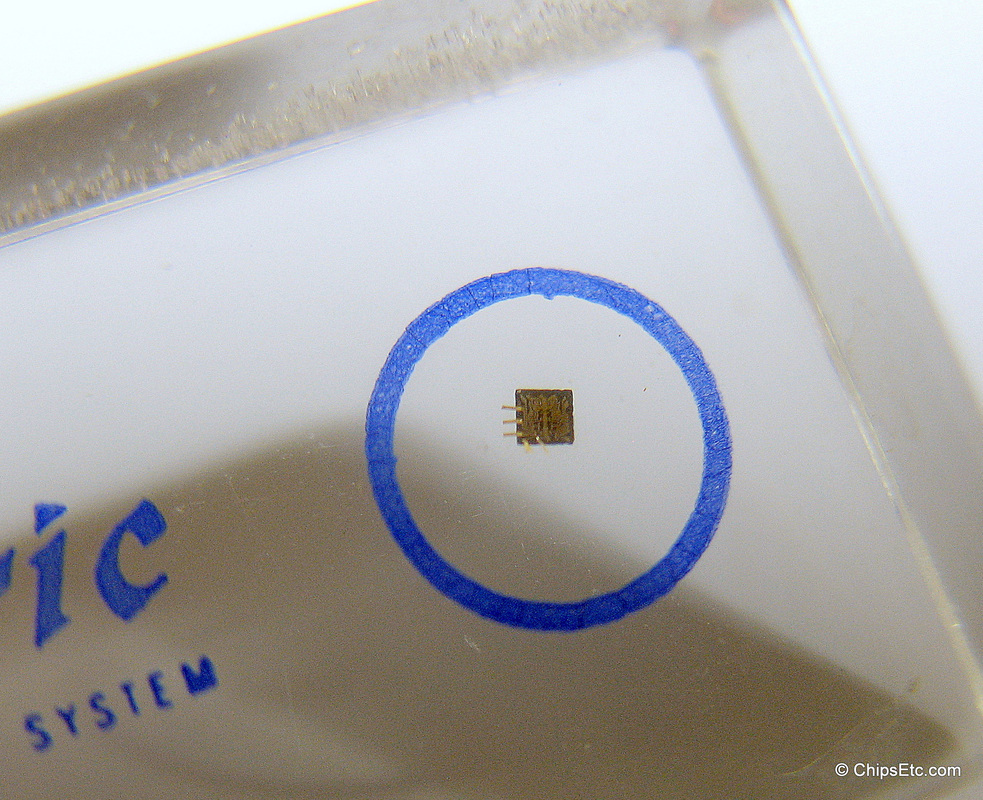

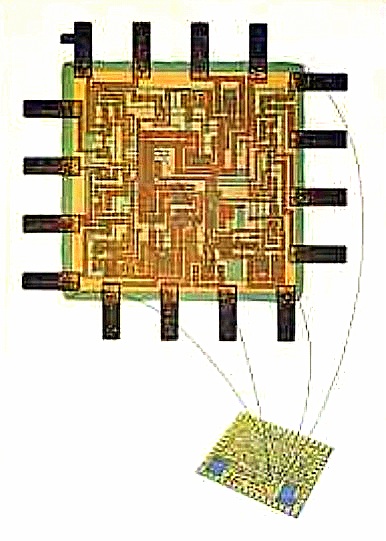
A Western Electric chip, part of a bigger Hybrid Integrated Circuit package (1970)
Western Electric Vacuum Tube & Transistor Technology Paperweight (1973)
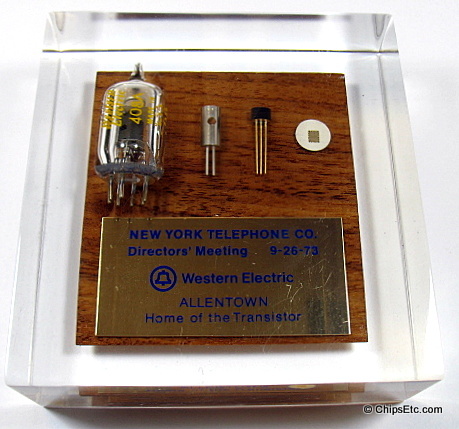
Item #750
Lucite paperweight from Western Electric was a gift to participants of the 1973 New York Telephone Co. Directors Meeting on 9-26-73.
Technology examples include a Western Electric 408A vacuum tube, two types of transistors, and an Integrated circuit.
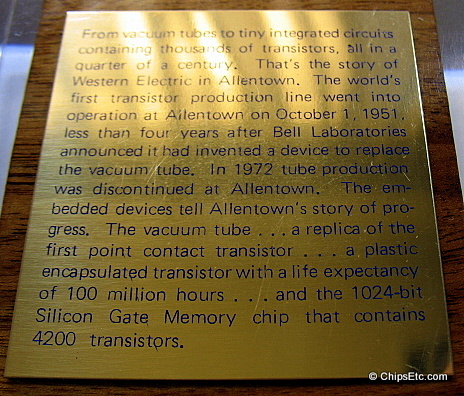
"From vacuum tubes to tiny integrated circuits containing thousands of transistors, all in a quarter of a century. That's the story of Western Electric in Allentown. The worlds first transistor production line went into operation at Allentown in October 1, 1951, less than four years after Bell Laboratories announced it had invented a device to replace the vacuum tube. In 1972 tube production was discontinued at Allentown. The embedded devices tell Allentown's story of progress. The vacuum tube...a replica of the first point contact transistor...a plastic encapsulated transistor with life expectancy of 100 million hours...and a 1024-bit Silicon Gate Memory chip that contains 4200 transistors."
This actual item was displayed as part of the "Silicon City: Computer History made in New York" exhibit at the New York Historical Society museum during 2015 - 2016.
Technology examples include a Western Electric 408A vacuum tube, two types of transistors, and an Integrated circuit.
"From vacuum tubes to tiny integrated circuits containing thousands of transistors, all in a quarter of a century. That's the story of Western Electric in Allentown. The worlds first transistor production line went into operation at Allentown in October 1, 1951, less than four years after Bell Laboratories announced it had invented a device to replace the vacuum tube. In 1972 tube production was discontinued at Allentown. The embedded devices tell Allentown's story of progress. The vacuum tube...a replica of the first point contact transistor...a plastic encapsulated transistor with life expectancy of 100 million hours...and a 1024-bit Silicon Gate Memory chip that contains 4200 transistors."
This actual item was displayed as part of the "Silicon City: Computer History made in New York" exhibit at the New York Historical Society museum during 2015 - 2016.

Bell Labs Micrographics CCD Device Paperweight (1975)
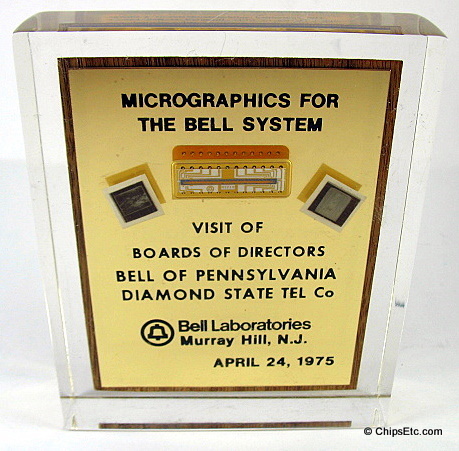
Item #689
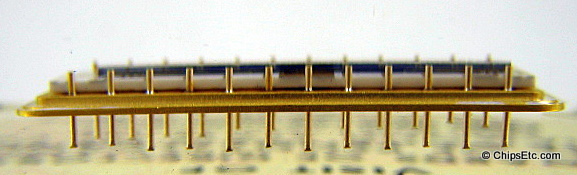
This Lucite paperweight contains an early Charge Couple Device (CCD) which is essentially a light sensor that contains an array of millions of tiny MOS capacitors, all on one single microchip. Light hitting each capacitor causes it to become charged. The brighter the light, the more charge will be held in the capacitor.
Willard Boyle and George Smith, scientists at Bell Laboratories invented the CCD back in 1969, with their first working version appearing in the world's first CCD video camera in 1969. In 1975 they demonstrated the first CCD camera with image quality sharp enough for broadcast television.
Today, CCD's are at the heart of most modern imaging and video devices such as digital cameras, video cameras, bar code readers, scanners, and copy machines.
This early CCD example from Bell Laboratories is marked M3210. It features gold plated frame & pins with a white ceramic packaging, typical of high quality integrated circuits of the 1970's.
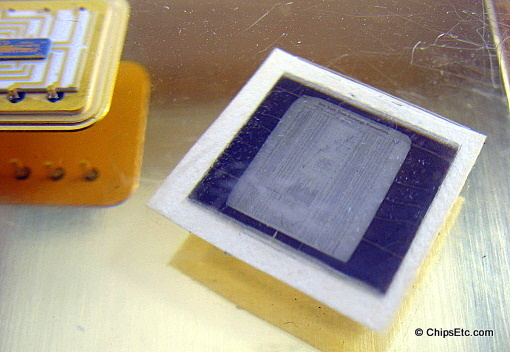
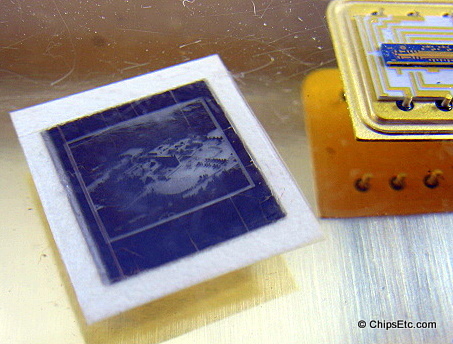
The paperweight also has two real examples of micrographic images scanned digitally using the Bell Labs CCD device and then printed out with a micro-laser.
Willard Boyle and George Smith, scientists at Bell Laboratories invented the CCD back in 1969, with their first working version appearing in the world's first CCD video camera in 1969. In 1975 they demonstrated the first CCD camera with image quality sharp enough for broadcast television.
Today, CCD's are at the heart of most modern imaging and video devices such as digital cameras, video cameras, bar code readers, scanners, and copy machines.
This early CCD example from Bell Laboratories is marked M3210. It features gold plated frame & pins with a white ceramic packaging, typical of high quality integrated circuits of the 1970's.
The paperweight also has two real examples of micrographic images scanned digitally using the Bell Labs CCD device and then printed out with a micro-laser.
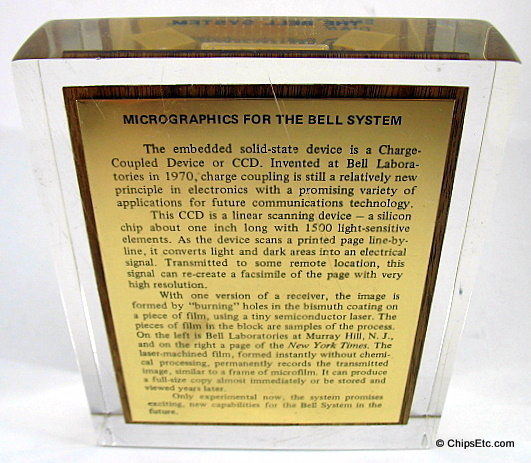

MICROGRAPHICS FOR THE BELL SYSTEM (1970)
"The embedded solid-state device is a Charge-Coupled Device or CCD. Invented at Bell Laboratories in 1970, charge coupling is still relatively new principle in electronics with a promising variety of applications for future communications technology.
This CCD is a linear scanning device - a silicon chip about one inch long with 1500 light-sensitive elements. As the device scans a printed page line-by-line, it converts light and dark areas into an electrical signal. Transmitted to some remote location, this signal can re-create a facsimile of the page with very high resolution.
With one version of a receiver, the image is formed by "burning" holes in the bismuth coating on a piece of film, using a tiny semiconductor laser. The pieces of film in the block are samples of the process. On the left is Bell Laboratories at Murray Hill, N.J., and on the right a page of the New York times. The laser-machined film, formed instantly without chemical processing, permanently records the transmitted image, similar to a frame of microfilm. It can produce a full-size copy almost immediately or be stored and be viewed years later.
Only experimental now, the system promises exciting new capabilities for the Bell System in the future."
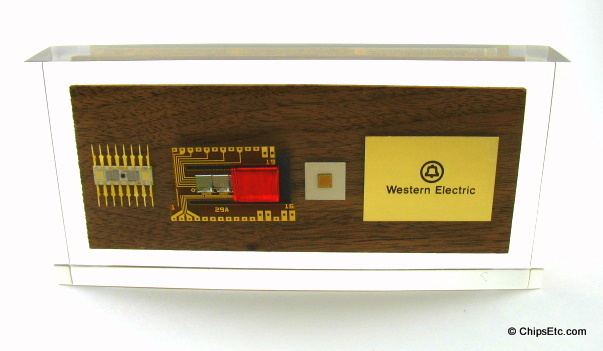
Western Electric BELLMAC-8, Star Dip Filter & Bubble Memory (1977)
Item #423
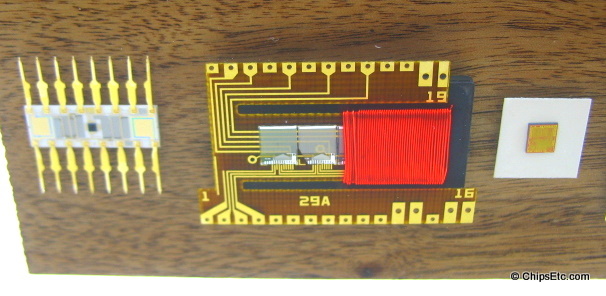
The Bell Labs designed "BELLMAC-8" (or Mac-8) was an 8-bit, 5 micron CMOS integrated circuit made by Western Electric. The BELLMAC-8 was Bell Labs very first microprocessor.
Also featured in this Lucite paperweight is a nice example of Western Electric's attempt at Bubble Memory devices, as well as a Bell Labs Star Dip Filter that was an active Hybrid Integrated circuit.
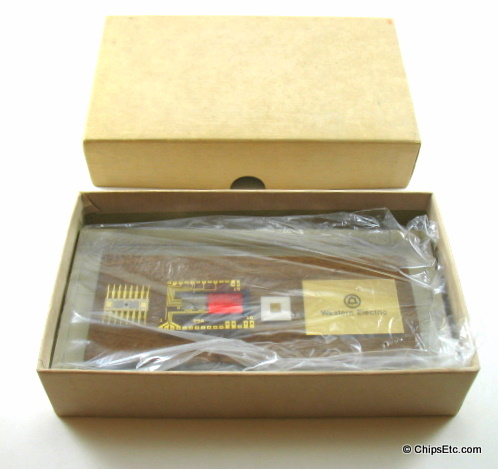
New & unused Condition in Original Box.
Measures 6 1/4" x 3" x 7/8"
Also featured in this Lucite paperweight is a nice example of Western Electric's attempt at Bubble Memory devices, as well as a Bell Labs Star Dip Filter that was an active Hybrid Integrated circuit.
New & unused Condition in Original Box.
Measures 6 1/4" x 3" x 7/8"
  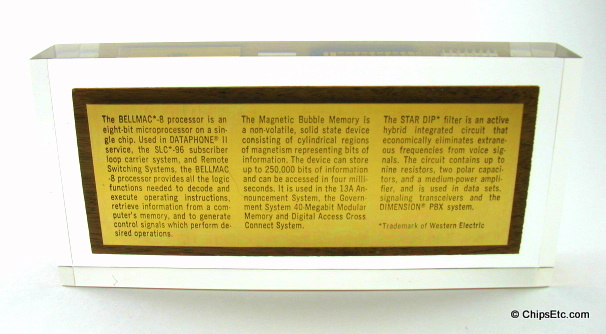 |
"The BELLMAC-8 processor is an eight-bit microprocessor on a single chip. Used in DATAPHONE II service, the SLC-96 subscriber loop carrier system, and Remote Switching Systems, the BELLMAC-8 processor provides all the logic functions needed to decode and execute operating instructions, retrieve information from a computer's memory, and to generate control signals which perform desired operations.
The Magnetic Bubble Memory is a non-volatile, solid state device consisting of cylindrical regions of magnetism representing bits of information. The device can store up to 250,000 bits of information and can be accessed in four milliseconds. It is used in the 13A Announcement System 40-Megabit Modular Memory and Digital Access Cross Connect System. The STAR DIP filter is an active hybrid integrated circuit that economically eliminates extraneous frequencies from voice signals. The circuit contains up to nine resistors, and a medium-power amplifier, and is used in data sets, signaling transceivers and the DIMENSION PBX system." |
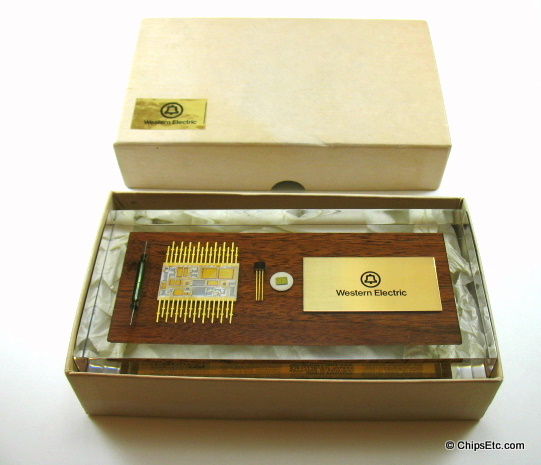
Western Electric ESS Integrated Circuit & Transistor Paperweight (1977)
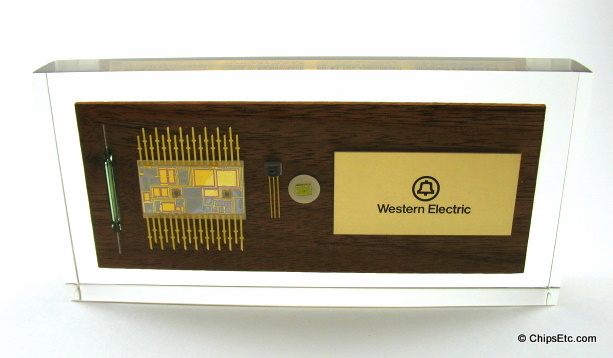
Item #422
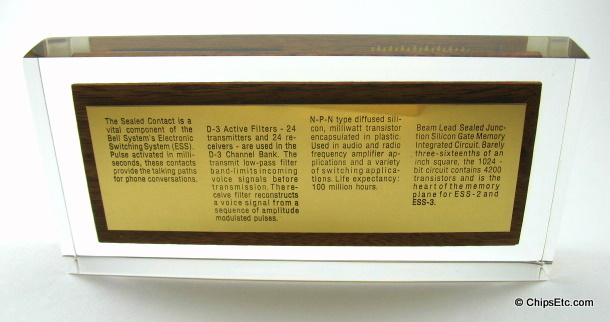
This Western Electric Lucite paperweight features a sealed contact used in electronic switching systems (ESS), a D-3 active filter, a N-P-N diffused silicon milliwat transistor, and a Beam lead sealed junction silicon gate memory Integrated Circuit chip used in ESS-2 & ESS-3 systems.
New condition in original box. Brand New in Original Box.
Measures 6 1/2" x 3 1/8" x 1"
New condition in original box. Brand New in Original Box.
Measures 6 1/2" x 3 1/8" x 1"
|
 |
Bell Labs Custom LSI Chip Keychain (early 1970's)
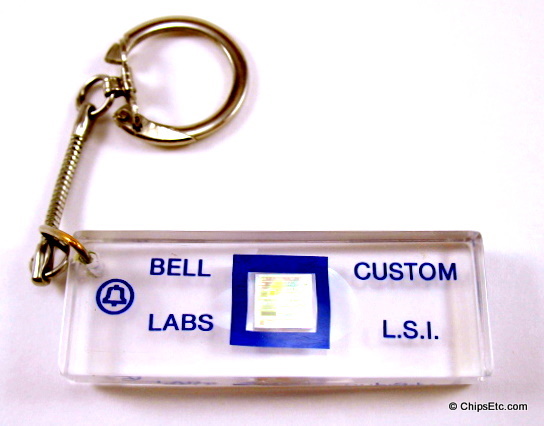
Item #101
This is a Bell Labs custom Large Scale Integrated (LSI) chip embedded in Lucite.
LSI circuits began to be produced in large quantities around 1970 for computer main memories and pocket calculators, with tens of thousands of transistors per chip.
LSI circuits began to be produced in large quantities around 1970 for computer main memories and pocket calculators, with tens of thousands of transistors per chip.
Bell Telephone Labs Chip Lapel Pin (Late 1970s)
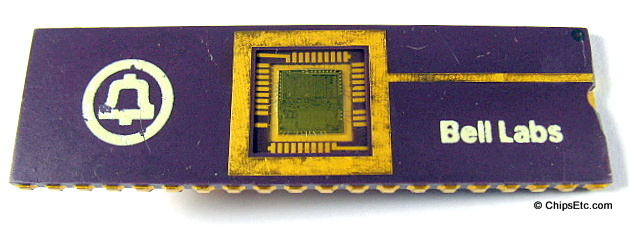
Item #777
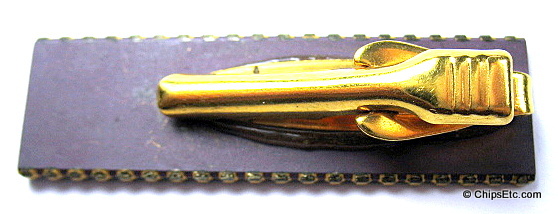
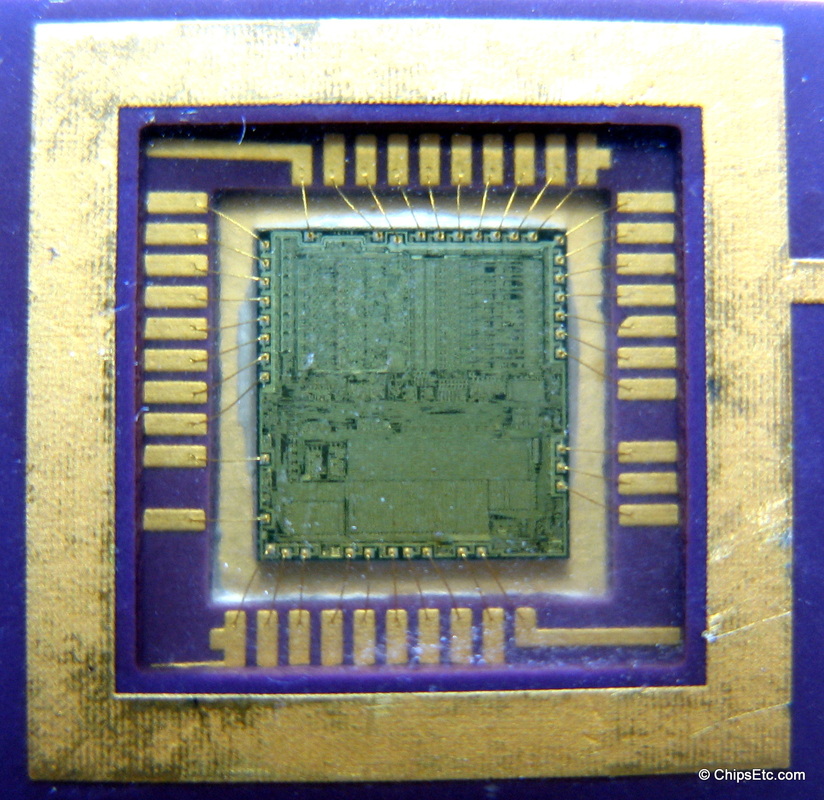
This rare lapel pin was a gift to Bell Labs employees and features a Ceramic DIP package with gold leads, frame & ground strap. The chip and it's bonded gold wires are visible under a clear plastic window covering.
This chip would have been by designed at Bell Labs, manufactured by Western Electric, and used in the Bell Telephone system's switching network.
This top of this ceramic chip is custom marked with Bell Labs & the Bell System Logo.
This chip would have been by designed at Bell Labs, manufactured by Western Electric, and used in the Bell Telephone system's switching network.
This top of this ceramic chip is custom marked with Bell Labs & the Bell System Logo.
Bell Labs MAC-4 First Single Chip DSP BELLMAC-4 Paperweight (1979)
Item #015
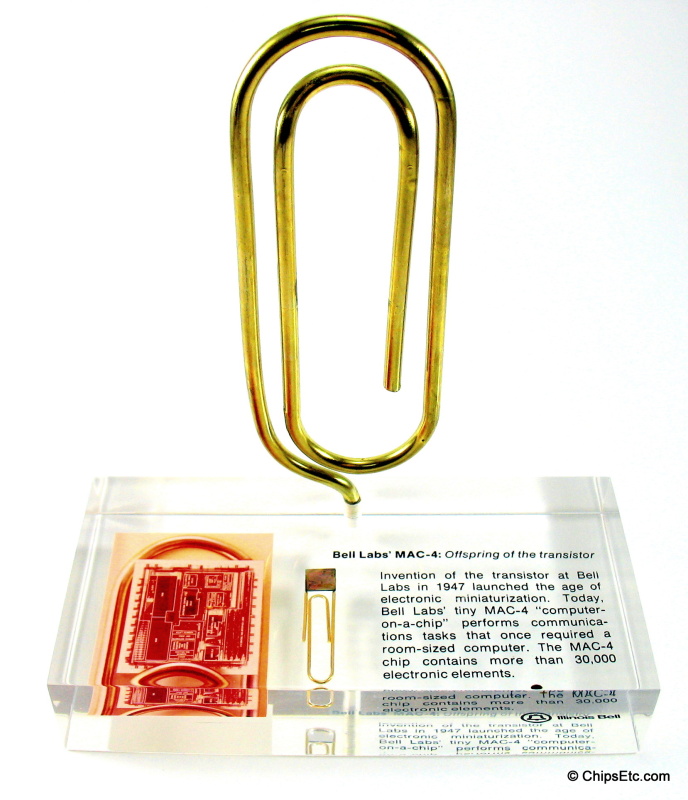
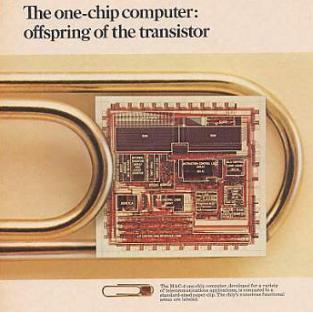
In 1979 Bell Labs introduced the first single-chip digital signal processor (DSP), the Mac-4 (or BELLMAC-4) Microprocessor. Manufactured using the latest CMOS technology at the time, the Mac-4 contained 30,000 elements and was a computer-on-a-chip with 1.5 ROM and .1k RAM on chip.
Originally developed for the telecommunications switching industry The DSP is the engine of today's multimedia revolution. DSP technology is in multimedia PCs and in the modems that connect computers to the Internet. It's in wireless phones, answering machines, and voice-mail; it's in video games talking toys, DVD players and digital cameras.
The AT&T DSP1 was a pioneering digital signal processor (DSP) created by Bell Labs. The DSP1 started in 1977 with a Bell Labs study that recommended creating a large-scale integrated circuit for digital signal processing. It described a basic DSP architecture with multiplier/accumulator, addressing unit, and control; the I/O, data, and control memories were planned to be off-chip until large-scale integration could make a single chip implementation feasible.
The DSP1 specification was completed in 1978, with first samples tested in May 1979. This first implementation was a single-chip DSP, containing all functional elements found in today's DSP's including multiplier-accumulator (MAC), parallel addressing unit, control, control memory, data memory, and I/O. It was designed with a 20-bit fixed point data format, and 16-bit coefficients and instructions, implemented in a 4.5 micrometer DRAM process technology. By October 1979 other Bell Labs groups began development using the DSP1, most notably as a key component in AT&T's 5ESS switch.
This lucite paperweight has an actual MAC-4 Chip sitting on a standard sized paperclip for comparison, includes a large paperclip that screws into the paperweight.
Originally developed for the telecommunications switching industry The DSP is the engine of today's multimedia revolution. DSP technology is in multimedia PCs and in the modems that connect computers to the Internet. It's in wireless phones, answering machines, and voice-mail; it's in video games talking toys, DVD players and digital cameras.
The AT&T DSP1 was a pioneering digital signal processor (DSP) created by Bell Labs. The DSP1 started in 1977 with a Bell Labs study that recommended creating a large-scale integrated circuit for digital signal processing. It described a basic DSP architecture with multiplier/accumulator, addressing unit, and control; the I/O, data, and control memories were planned to be off-chip until large-scale integration could make a single chip implementation feasible.
The DSP1 specification was completed in 1978, with first samples tested in May 1979. This first implementation was a single-chip DSP, containing all functional elements found in today's DSP's including multiplier-accumulator (MAC), parallel addressing unit, control, control memory, data memory, and I/O. It was designed with a 20-bit fixed point data format, and 16-bit coefficients and instructions, implemented in a 4.5 micrometer DRAM process technology. By October 1979 other Bell Labs groups began development using the DSP1, most notably as a key component in AT&T's 5ESS switch.
This lucite paperweight has an actual MAC-4 Chip sitting on a standard sized paperclip for comparison, includes a large paperclip that screws into the paperweight.
 Close-up of the Bell Mac-4 chip |
|

Bell Labs MAC-4 DSP Chip Photo Tray (1979)
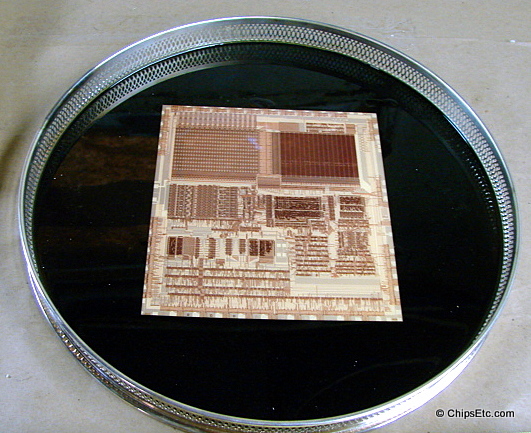
Item #594
This serving tray was a gift from Bell Labs to some of it's employees to celebrate the introduction of the BELL MAC-4, the world's first single chip Digital Signal Processor (DSP).
The tray features an embedded color image showing the complex circuitry of the Mac-4 integrated circuit chip.
Comes new in original box. Measures 12" across.
The tray features an embedded color image showing the complex circuitry of the Mac-4 integrated circuit chip.
Comes new in original box. Measures 12" across.
 The Bell Labs Mac-4 DSP chip up-close |
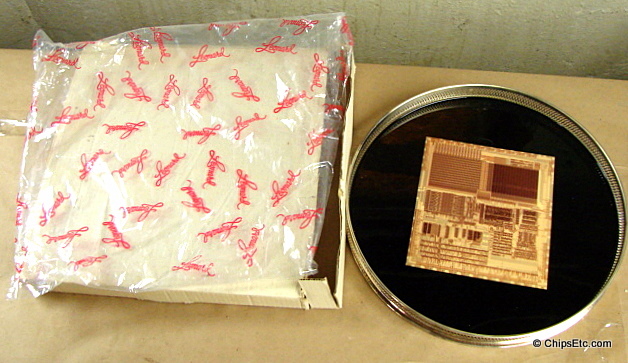 Mac-4 employee gift, Serving tray and box. |
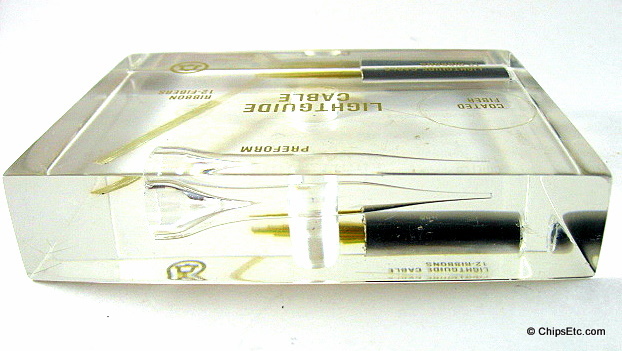
Western Electric Atlanta Works "Lightguide" AT&T FT3 Fiber Optic Cable (1980)
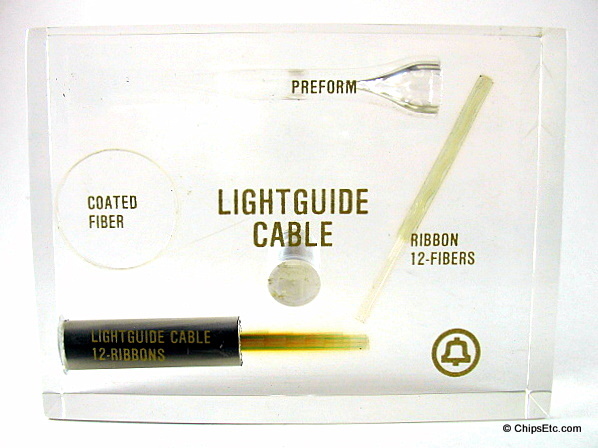
Item #516
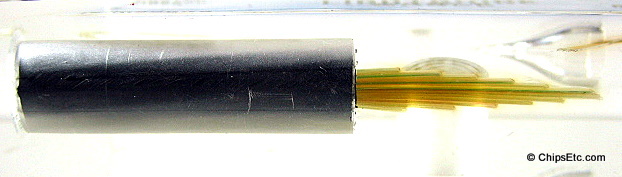
Fiber optics is the transmission of data via light waves passed through glass threads. Most major telephone companies have replaced, or are in the process of replacing, traditional copper telephone lines with fiber optic cables.
Western Electric engineers started experimenting with fiber optic cable networks in the mid 1970's. By 1980 AT&T was manufacturing the "Lightguide" fiber Optic cables at it's Western Electric "Atlanta Works" plant. "Lightguide" was AT&T's original name for optical fiber transmission; it was derived from "waveguide", the name for the hollow pipes used to carry microwave signals.
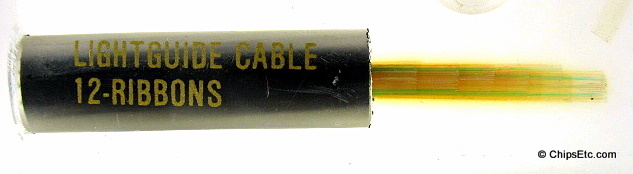
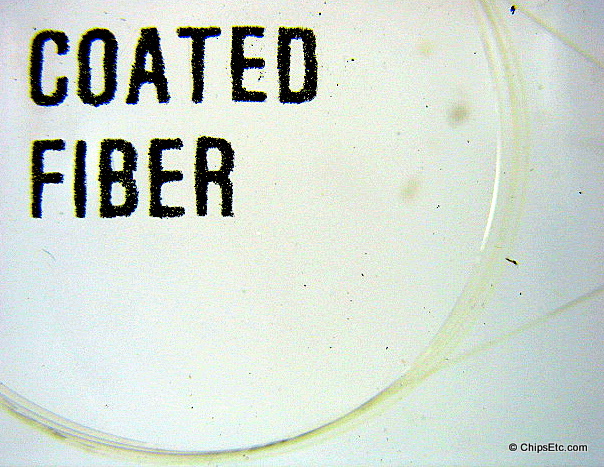
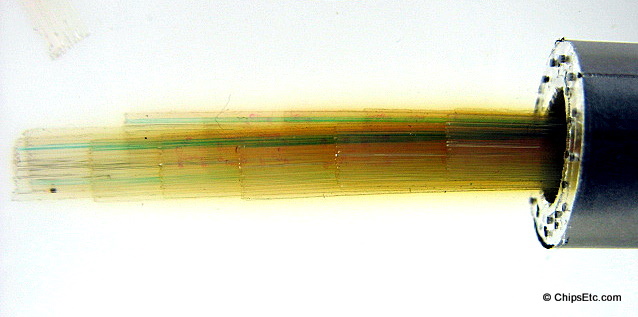
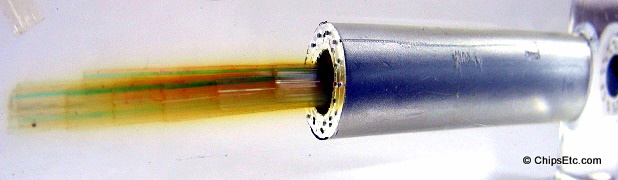
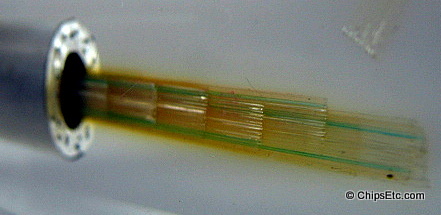
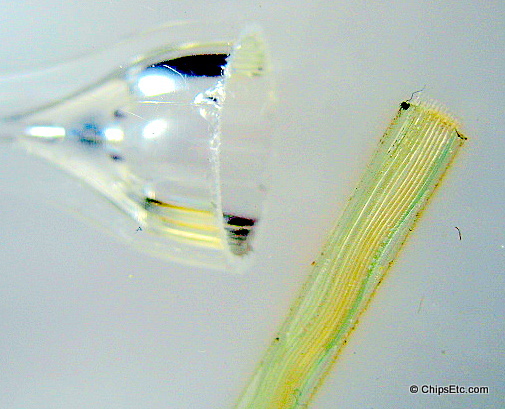
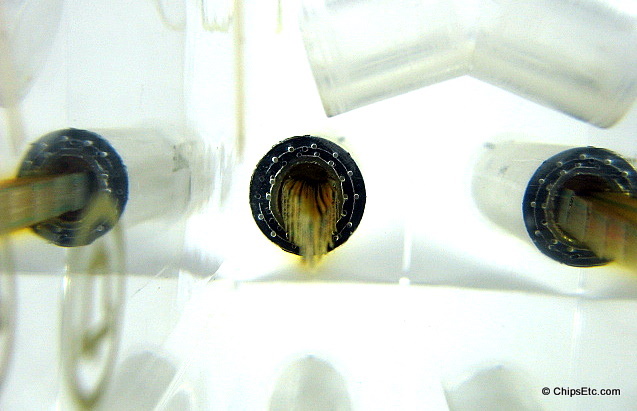
Lightwave Cable is made from quartz glass rod. The 1/2" diameter cable can have up to 144 fibers in 12 ribbons and can transmit 40,000 voice conversations at any one time.
Digital data was transmitted in the form of light wave pulses from a Western Electric manufactured 200A laser component.
In 1980, AT&T Corp. sought permission from the U.S. Federal Communications Commission to build a 611-mile fiber optic network connecting major eastern U.S. cities from Cambridge Massachusetts to Washington D.C. This Cambridge to Washington system was AT&T's very first fiber-optic route. Work on the network began in 1981 and was operational by 1983. The technology was initially designated as type FT3 and had a capacity of 45 Mb/sec, but by 1984 had been upgraded to FT3C, carrying 90 Mb/sec. By 1984, the amount of fiber optic cables installed in the United States had reached 250,000 miles.
From the original maker of these advertising pieces:
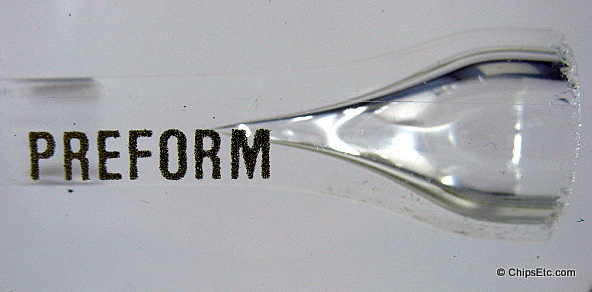
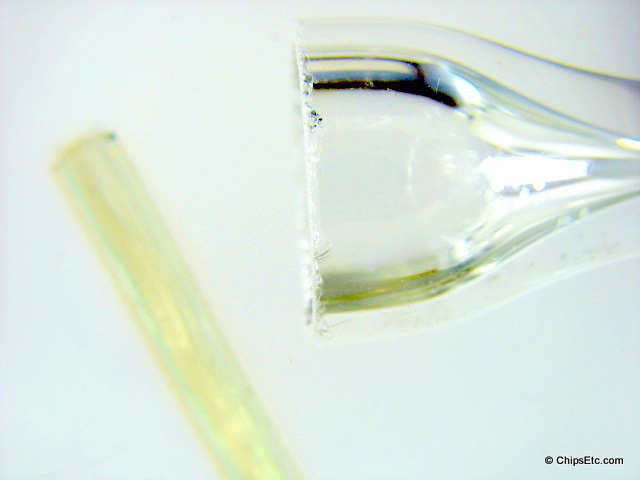
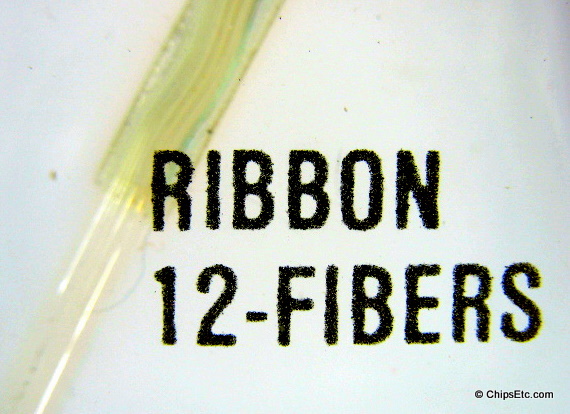
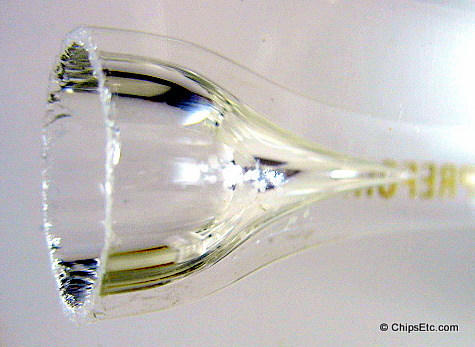
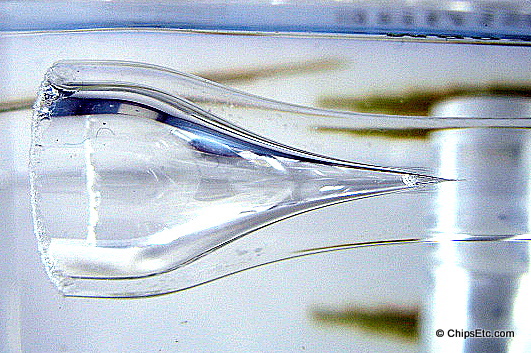
"I have owned an advertising firm for 32+ years and for many of those years what was formerly called Bell System affiliated companies were my best customers. One of these was the Western Electric Atlanta Works cable manufacturing facility in Atlanta. We did much work for them over the years. In the late 1970's and 1980's Lightguide cable was the hot product, and at one point they were the world's largest cable manufacturer. Public relations and management wanted to provide custom gifts related to the Lightguide product. One of these products was for me to take the various components required in arriving at ribbon fibers and illustrate them in an advertising piece. The idea was arrived at to embed the components in Lucite. At the time these were proprietary components and Western Electric didn't chance shipping them to my factory located in Canada. So Western Electric paid my time and expenses to physically take the components to the factory, wait the day for the pieces to be formed and return with them, and in fact there were three trips there. That was the old days when funds were available for such projects. These are two of the pieces made {Items #515 & 516}. The one included the various components: Glass preform, coated fiber, 12-fiber ribbon and 12-ribbon cable. We had the factory print a clear piece of acetate in gold with the names and Bell logo. You will notice that this piece has a whole drilled in the base. For some of these we mounted them on a wooden box containing electronics and a piece of cable. We cut fibers in the cable so that when you pushed a button a "bell" would light up! This piece was a test Lucite item. (I have only one of these very special Lightguide display boxes with the light up filament.) Dec. 2010
Western Electric engineers started experimenting with fiber optic cable networks in the mid 1970's. By 1980 AT&T was manufacturing the "Lightguide" fiber Optic cables at it's Western Electric "Atlanta Works" plant. "Lightguide" was AT&T's original name for optical fiber transmission; it was derived from "waveguide", the name for the hollow pipes used to carry microwave signals.
Lightwave Cable is made from quartz glass rod. The 1/2" diameter cable can have up to 144 fibers in 12 ribbons and can transmit 40,000 voice conversations at any one time.
Digital data was transmitted in the form of light wave pulses from a Western Electric manufactured 200A laser component.
In 1980, AT&T Corp. sought permission from the U.S. Federal Communications Commission to build a 611-mile fiber optic network connecting major eastern U.S. cities from Cambridge Massachusetts to Washington D.C. This Cambridge to Washington system was AT&T's very first fiber-optic route. Work on the network began in 1981 and was operational by 1983. The technology was initially designated as type FT3 and had a capacity of 45 Mb/sec, but by 1984 had been upgraded to FT3C, carrying 90 Mb/sec. By 1984, the amount of fiber optic cables installed in the United States had reached 250,000 miles.
From the original maker of these advertising pieces:
"I have owned an advertising firm for 32+ years and for many of those years what was formerly called Bell System affiliated companies were my best customers. One of these was the Western Electric Atlanta Works cable manufacturing facility in Atlanta. We did much work for them over the years. In the late 1970's and 1980's Lightguide cable was the hot product, and at one point they were the world's largest cable manufacturer. Public relations and management wanted to provide custom gifts related to the Lightguide product. One of these products was for me to take the various components required in arriving at ribbon fibers and illustrate them in an advertising piece. The idea was arrived at to embed the components in Lucite. At the time these were proprietary components and Western Electric didn't chance shipping them to my factory located in Canada. So Western Electric paid my time and expenses to physically take the components to the factory, wait the day for the pieces to be formed and return with them, and in fact there were three trips there. That was the old days when funds were available for such projects. These are two of the pieces made {Items #515 & 516}. The one included the various components: Glass preform, coated fiber, 12-fiber ribbon and 12-ribbon cable. We had the factory print a clear piece of acetate in gold with the names and Bell logo. You will notice that this piece has a whole drilled in the base. For some of these we mounted them on a wooden box containing electronics and a piece of cable. We cut fibers in the cable so that when you pushed a button a "bell" would light up! This piece was a test Lucite item. (I have only one of these very special Lightguide display boxes with the light up filament.) Dec. 2010


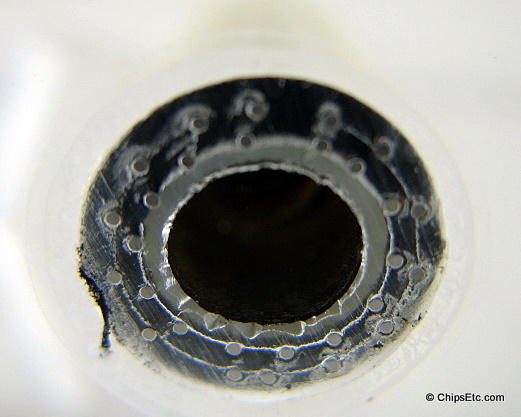
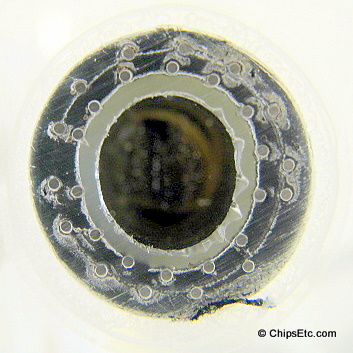
Western Electric Atlanta Works FT3 Fiber Optic Cable Connectors (1980)
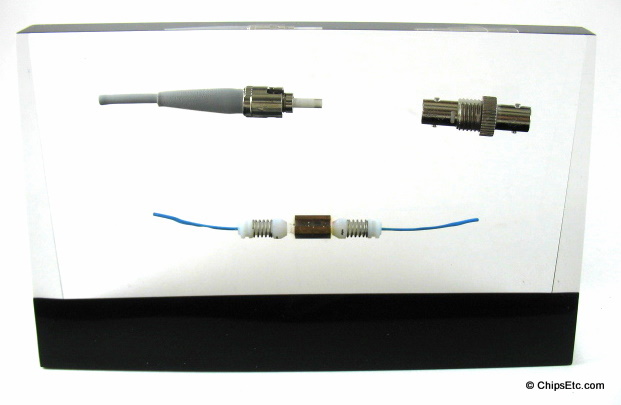
Item #515
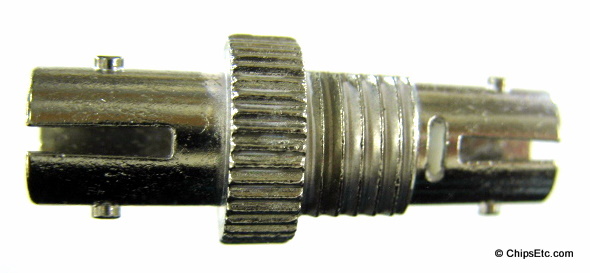
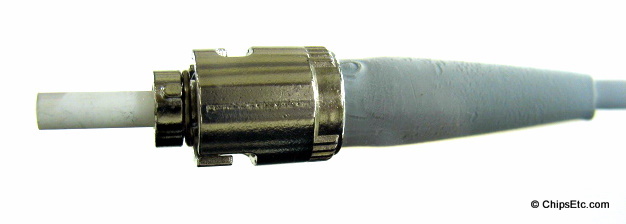
Continued - "The other embedment includes several cable connectors with which we were experimenting. If I recall correctly, this was the only one of these we made."
This Lucite paperweight contains examples of three experimental Fiber optic connectors from Western Electric.
This Lucite paperweight contains examples of three experimental Fiber optic connectors from Western Electric.

Bell Labs Western Electric Transistor Allentown Paperweight (1972)
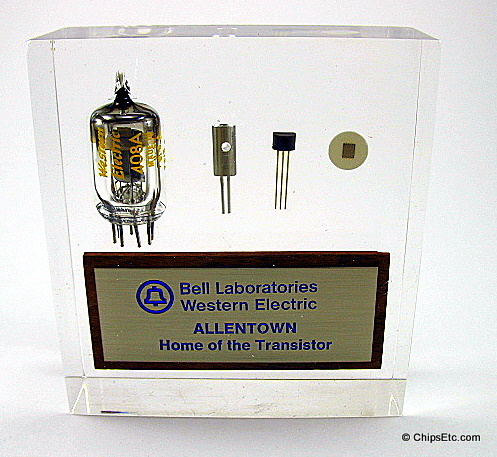
Item #263
This Lucite Paperweight shows the evolution from "vacuum tubes to tiny integrated circuits containing thousands of transistors, all in a quarter of a century".
Bell Labs researchers in Murray Hill, N.J., invented the transistor, but it was the Western Electric plant in Allentown, Pa. that developed most of the precision manufacturing processes needed to mass produce it.
In 1951, just four years after the invention of the transistor by Bell Laboratories, the Allentown Plant was opened to manufacture it's first transistors. In 1972, tube production was discontinued at the Allentown plant.
Embedded in this Lucite paperweight are telephone communication components that cover the history of the transistor (L-R with introduction dates): A #408A vacuum tube (1941), A replica of the first point contact transistor (1948), A plastic encapsulated bipolar junction transistor with a life expectancy of 100 million hours (1955), A 1024-bit Silicon Gate Memory Chip that contains 4200 transistors (1967).
On the back of this paperweight there is a description of the world's first transistor production line that went into operation at Allentown October 1, 1951.
Measures 3 1/2" x 3 1/2".
Bell Labs researchers in Murray Hill, N.J., invented the transistor, but it was the Western Electric plant in Allentown, Pa. that developed most of the precision manufacturing processes needed to mass produce it.
In 1951, just four years after the invention of the transistor by Bell Laboratories, the Allentown Plant was opened to manufacture it's first transistors. In 1972, tube production was discontinued at the Allentown plant.
Embedded in this Lucite paperweight are telephone communication components that cover the history of the transistor (L-R with introduction dates): A #408A vacuum tube (1941), A replica of the first point contact transistor (1948), A plastic encapsulated bipolar junction transistor with a life expectancy of 100 million hours (1955), A 1024-bit Silicon Gate Memory Chip that contains 4200 transistors (1967).
On the back of this paperweight there is a description of the world's first transistor production line that went into operation at Allentown October 1, 1951.
Measures 3 1/2" x 3 1/2".
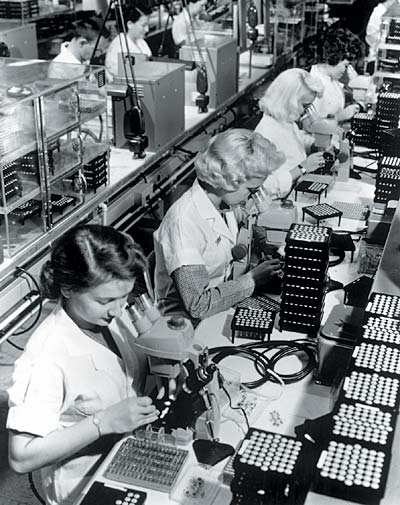
Western Electric workers assembling Transistors in Allentown Pa. (Late 1950s)
Western Electric Thin Film Hybrid Integrated Circuit (1982)
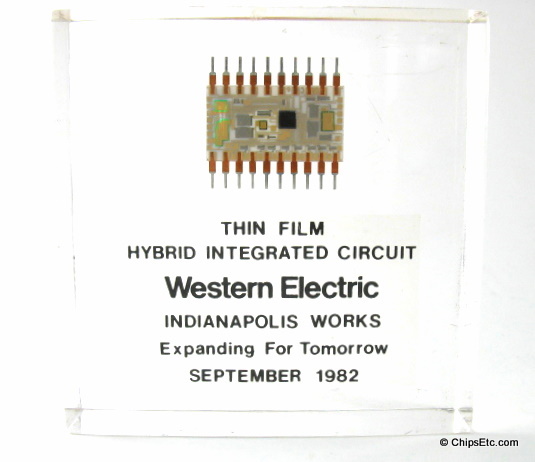
Item #492
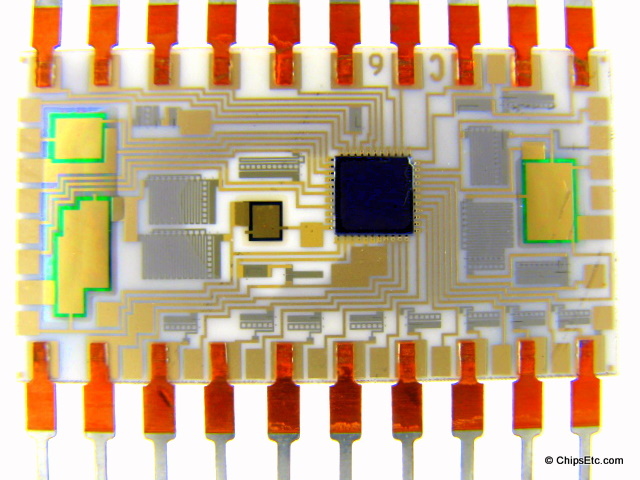
Clear Lucite Reads "Expanding for Tomorrow, 1982" paperweight has a Western Electric Thin Film Hybrid Integrated Circuit manufactured at it's "Indianapolis Works" plant. This IC was an active filter that eliminated extraneous frequencies from voice signals. In 1982 this IC would have been used in the Bell Telephone System's data sets, signaling transceivers and PBX systems.
Most thin film hybrid Integrated Circuits used transistors and integrated circuits in the form of bare silicon chips, which were mounted with adhesive and connected by wire bonding. Typically, the completed circuit is packaged in a hermetically sealed metal or ceramic package.
Western Electric's " Indianapolis Works" Telephone Plant opened in 1948 and officially closed it's doors in 1986.
Measures 3" x 3".
Most thin film hybrid Integrated Circuits used transistors and integrated circuits in the form of bare silicon chips, which were mounted with adhesive and connected by wire bonding. Typically, the completed circuit is packaged in a hermetically sealed metal or ceramic package.
Western Electric's " Indianapolis Works" Telephone Plant opened in 1948 and officially closed it's doors in 1986.
Measures 3" x 3".
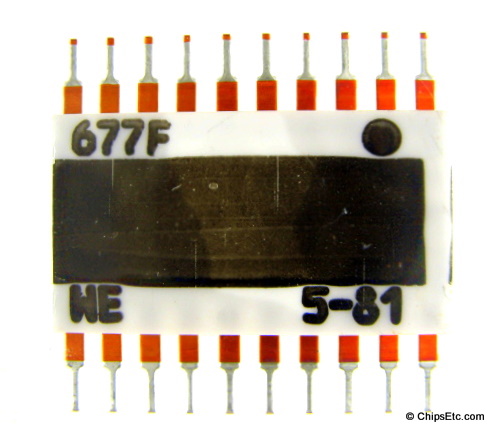
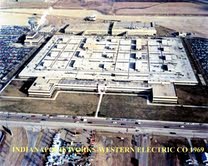
AT&T 256K Memory Chip Lapel Pin (early 1980s)

Item #490
This black enamel and gold tone lapel pin features an AT&T 256K memory chip. This item was a recognition or Service Award given out to an AT&T employee.
New in original case, Measures 1/2" square.
New in original case, Measures 1/2" square.
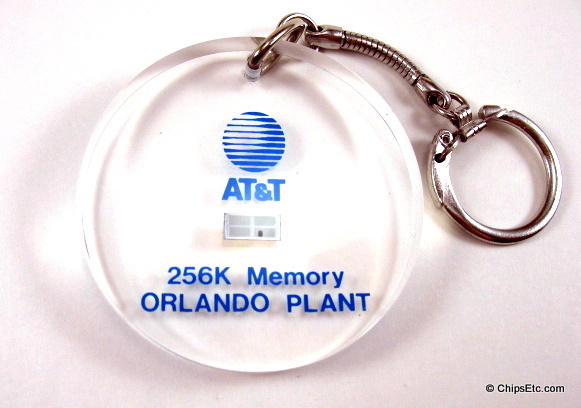
AT&T Orlando 256k Memory Chip Keychain (1984)
Item #157 (#744 similar)
This acrylic keychain contains an actual AT&T 256K memory chip produced at AT&T's semiconductor packaging plant located at Orlando Florida.
The Orlando plant was responsible for the assembly and packaging of AT&T's 256K memory chips manufactured at AT&T's Kansas City plant. In 1987 AT&T started phasing out its packaging operation at the Orlando plant.
New Condition, Measures 2 inches in diameter and 1/4 inch thick.
The Orlando plant was responsible for the assembly and packaging of AT&T's 256K memory chips manufactured at AT&T's Kansas City plant. In 1987 AT&T started phasing out its packaging operation at the Orlando plant.
New Condition, Measures 2 inches in diameter and 1/4 inch thick.
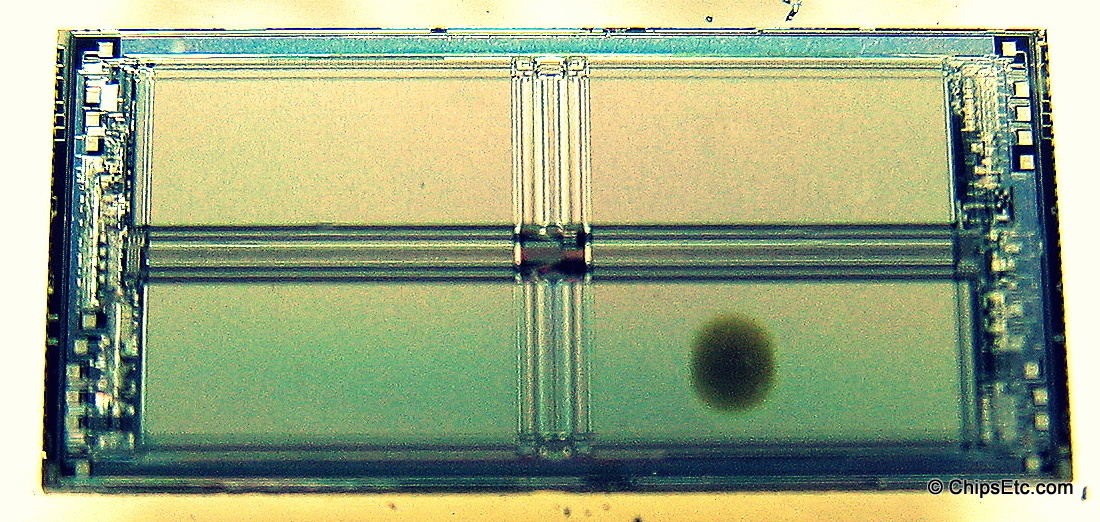
Close-up of the AT&T 256k memory chip