_
Collecting Vintage Computer Memorabilia
New to the world of vintage computer memorabilia? You're not alone in your fascination with old computer parts, whether it be chips, CPUs, computer hardware, or other ephemera. In fact, you're in good company! From hobbyist tinkerers to computer scientists, to historians, collecting vintage computer memorabilia has become a pastime for many in the past 20 years. Early in the 21st century, computer technology has been progressing in leaps and bounds, which has only served to make these markers of the past more interesting. For the new or prospective collector, here's a rundown of the many reasons why this pastime has caught on so strongly.
Hold a Piece of the Past:
Why do museums exist? It's always intriguing (and a valuable lesson) to see how we got from the past to where we are today. The same can be said of collecting vintage memorabilia. Take an old Apple II computer. From ubiquity in the middle school classroom of the 1980's, the Apple II is now functionally useless: except for helping us understand Apple's reemergence as a huge player in personal computing.
What is Rare is Intriguing:
From baseball cards to stamps, humans have always had an inkling to collect the rare, and to pore over things that are difficult to get. The difference with computer memorabilia? Many old components are becoming so rare, with only a few hundred or thousand in the world, that collectors really do form an important link to our technological past.
Tinkering for the Fun of It:
Collecting vintage computer parts doesn't have to be expensive. Many collectors choose to acquire cheap vintage parts so they can get them up and running again. There's a joy in resurrecting something from the past and bringing it back to life.
For Style:
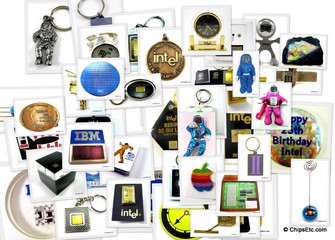
Just like any other style decision, holding onto antique technology can say something about who you are. A paperweight or a keychain with an old computer chip is fun, and a simple way to make a statement. A restored turquoise iMac can add vintage flare to any office.
The Glory of the Hunt:
For many collectors, the intrigue of vintage memorabilia lies in the chase. eBay of course is a great place to start, as are local flea markets, yard sales, thrift stores, and anywhere people might be cleaning out old gadgets they have long forgotten about.
And Last But Not Least: Money:
Some dedicated collectors have managed to amass collections that are worth real money, as vintage electronics age from yesterday's junk to today's antiques. Some of the most dedicated have thousands of computer chips and CPUs that have become mini-museums in themselves (with estimated price tags to prove it).
Collecting Vintage Computer Memorabilia
New to the world of vintage computer memorabilia? You're not alone in your fascination with old computer parts, whether it be chips, CPUs, computer hardware, or other ephemera. In fact, you're in good company! From hobbyist tinkerers to computer scientists, to historians, collecting vintage computer memorabilia has become a pastime for many in the past 20 years. Early in the 21st century, computer technology has been progressing in leaps and bounds, which has only served to make these markers of the past more interesting. For the new or prospective collector, here's a rundown of the many reasons why this pastime has caught on so strongly.
Hold a Piece of the Past:
Why do museums exist? It's always intriguing (and a valuable lesson) to see how we got from the past to where we are today. The same can be said of collecting vintage memorabilia. Take an old Apple II computer. From ubiquity in the middle school classroom of the 1980's, the Apple II is now functionally useless: except for helping us understand Apple's reemergence as a huge player in personal computing.
What is Rare is Intriguing:
From baseball cards to stamps, humans have always had an inkling to collect the rare, and to pore over things that are difficult to get. The difference with computer memorabilia? Many old components are becoming so rare, with only a few hundred or thousand in the world, that collectors really do form an important link to our technological past.
Tinkering for the Fun of It:
Collecting vintage computer parts doesn't have to be expensive. Many collectors choose to acquire cheap vintage parts so they can get them up and running again. There's a joy in resurrecting something from the past and bringing it back to life.
For Style:
Just like any other style decision, holding onto antique technology can say something about who you are. A paperweight or a keychain with an old computer chip is fun, and a simple way to make a statement. A restored turquoise iMac can add vintage flare to any office.
The Glory of the Hunt:
For many collectors, the intrigue of vintage memorabilia lies in the chase. eBay of course is a great place to start, as are local flea markets, yard sales, thrift stores, and anywhere people might be cleaning out old gadgets they have long forgotten about.
And Last But Not Least: Money:
Some dedicated collectors have managed to amass collections that are worth real money, as vintage electronics age from yesterday's junk to today's antiques. Some of the most dedicated have thousands of computer chips and CPUs that have become mini-museums in themselves (with estimated price tags to prove it).
Our Collection
Back in 1953...

RCA Germanium TV transistors from 1953
Acrylic display items became a new way to promote and advertise the latest electronic & semiconductor technology components starting back in the early-mid 1950's with the promotion of the earliest available commercial transistors. The oldest item in our collection (image to the right) is an RCA "Germanium Television Transistors" paperweight dating back to 1953.
Samples of actual technology components encased in Lucite were an ideal way for a company salesperson to show off their new products to potential clients. Sometimes these items were made specifically for a company to give out as gifts to employees to commemorate a new product release, important milestone or anniversary date. Acrylic items were also made as limited edition souvenirs given out to the General Public that were attending Specialized Events, trade shows and Promotions.
Acrylic display items with technology items embedded in them have since been produced in numerous forms such as paperweights, keychains, ashtrays, and plaques.
Samples of actual technology components encased in Lucite were an ideal way for a company salesperson to show off their new products to potential clients. Sometimes these items were made specifically for a company to give out as gifts to employees to commemorate a new product release, important milestone or anniversary date. Acrylic items were also made as limited edition souvenirs given out to the General Public that were attending Specialized Events, trade shows and Promotions.
Acrylic display items with technology items embedded in them have since been produced in numerous forms such as paperweights, keychains, ashtrays, and plaques.
1996 and beyond!

Intel 4004 Microprocessor Clock from 1996
Our collection first started in 1996 during the hey-day of the IBM Personal Computer & something relatively new to the public called "The Internet".
This was an amazing time when corporate advertising & promotional budgets were virtually unlimited, tech companies were enjoying extremely strong growth and each quarter brought on record earnings for many. Intel's Pentium "Intel Inside" campaign was in full force and the company was preparing to launch the Pentium II BunnyPeople campaign. Promotional items of all types were abundantly available. In 1996 AOL was the choice for Internet Connectivity, Microsoft had just released it's Windows 95 operating system, Netscape navigator was the browser of choice, and Yahoo was "The" search engine.
Years later, in 2009, our collection had grown to over 400 High-Tech memorabilia items. We decided it was time to start the process of photographing and cataloging our collection,and to create the ChipsEtc.com web site. Our goal was to showcase the exciting "Evolution of Computer & Microprocessor Technology" that has took place over the last century using the memorabilia items found in our collection.
ChipsEtc.com was launched on 01/01/2010 with over 500 memorabilia items. We choose to group the items in our collection based on the company they promote. All items in the collection are displayed with their image, date of release, as well as historical background information.
Our collection is an ongoing effort that will continue to grow over time, so please check back often. Our specialty is promotional Lucite Paperweights, Jewelry & Keychains made with real Computer Chips embedded inside.
This was an amazing time when corporate advertising & promotional budgets were virtually unlimited, tech companies were enjoying extremely strong growth and each quarter brought on record earnings for many. Intel's Pentium "Intel Inside" campaign was in full force and the company was preparing to launch the Pentium II BunnyPeople campaign. Promotional items of all types were abundantly available. In 1996 AOL was the choice for Internet Connectivity, Microsoft had just released it's Windows 95 operating system, Netscape navigator was the browser of choice, and Yahoo was "The" search engine.
Years later, in 2009, our collection had grown to over 400 High-Tech memorabilia items. We decided it was time to start the process of photographing and cataloging our collection,and to create the ChipsEtc.com web site. Our goal was to showcase the exciting "Evolution of Computer & Microprocessor Technology" that has took place over the last century using the memorabilia items found in our collection.
ChipsEtc.com was launched on 01/01/2010 with over 500 memorabilia items. We choose to group the items in our collection based on the company they promote. All items in the collection are displayed with their image, date of release, as well as historical background information.
Our collection is an ongoing effort that will continue to grow over time, so please check back often. Our specialty is promotional Lucite Paperweights, Jewelry & Keychains made with real Computer Chips embedded inside.
Home

